
Desserts
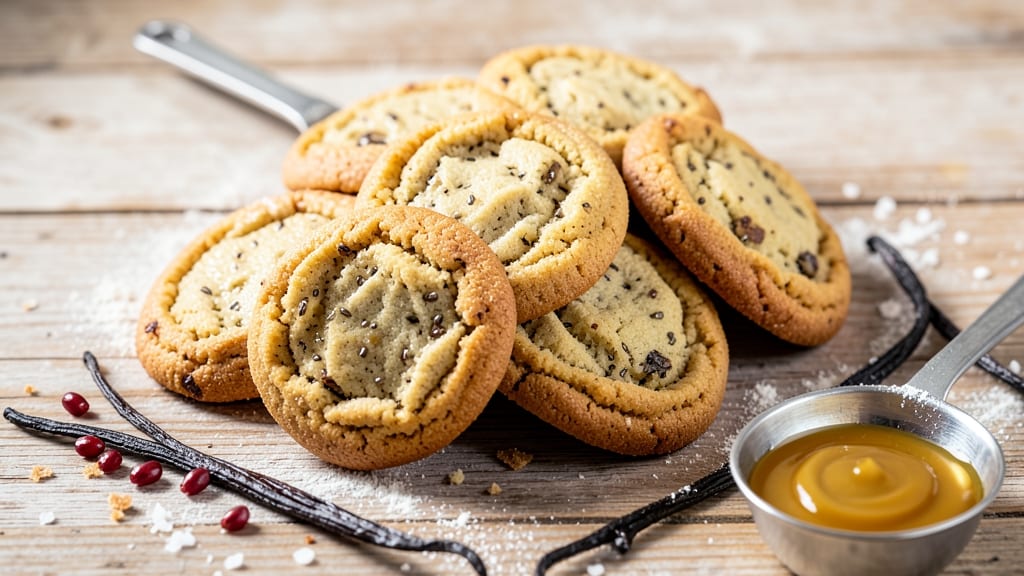
This vanilla cookie recipe without eggs delivers the perfect balance of crispy edges and chewy centers—a foolproof formula that works every time. 💛 The secret lies in using a simple flaxseed egg substitute that binds without compromising texture, while high-quality butter and vanilla bean paste elevate the flavor to bakery-level quality.
I developed this recipe after years of testing egg-free alternatives, and it's finally the one that consistently delivers results.
The magic happens in the mixing technique: creaming the butter and sugar until light and fluffy creates that signature tender crumb, while chilling the dough before baking prevents excessive spreading.
This method ensures your cookies stay perfectly shaped with that coveted crispy exterior and soft, melt-in-your-mouth center. No special equipment or complicated steps—just straightforward baking that yields restaurant-quality cookies.
What makes this recipe truly special is how it transforms simple pantry ingredients into something extraordinary. The flaxseed "eggs" provide the structure you'd expect from traditional recipes, while the vanilla bean paste adds depth of flavor that ordinary extracts can't match.
The result? Cookies that are rich, aromatic, and satisfyingly chewy—without requiring a single egg.
Whether you're accommodating dietary restrictions or simply want to try a new technique, this recipe proves that egg-free baking doesn't mean sacrificing quality. Ready in just 15 minutes of prep followed by 12 minutes in the oven, these cookies are perfect for holidays, potlucks, or satisfying a late-night sweet tooth.
Let's get baking!
Ingredients for vanilla cookie recipe without eggs
High-quality butter, flaxseed magic, and vanilla elevate simple pantry staples into bakery-style cookies.
| Ingredient | Amount | Notes |
|---|---|---|
| Unsalted Butter 🧈 | 1 cup | Cold, cut into cubes |
| Granulated Sugar 🍚 | 1 cup | Superfine preferred for smooth texture |
| Light Brown Sugar 🍚 | ½ cup | Packed firmly for chewiness |
| Vanilla Bean Paste 🌿 | 2 tsp | High-quality for authentic flavor |
| Ground Flaxseed 🌾 | 3 tbsp | Mixed with water for egg substitute |
| All-Purpose Flour 🌾 | 2 ½ cups | Sifted for light texture |
| Baking Soda 🧂 | ½ tsp | Ensures proper rise |
| Diamond Crystal Kosher Salt 🧂 | ½ tsp | Adjusts flavor balance |
| Pure Vanilla Extract 🌿 | 1 tsp | Complements the bean paste |
| Large Egg Whites 🥚 | 2 whole | Optional for extra crispiness |
| Toasted Slivered Almonds 🌰 | ½ cup | For texture and crunch |
The butter is non-negotiable—European-style or Plugrá delivers the rich flavor and proper texture. Grab it from the gourmet section of stores like Whole Foods or Williams Sonoma for the best quality. Vanilla bean paste, not extract, is key here—Madagascar bourbon or Tahitian vanilla from Penzeys or specialty markets adds that restaurant-quality depth. The flaxseed should be freshly ground for maximum binding power; store-bought ground flaxseed works, but grinding your own from whole seeds (available at Trader Joe's) makes a noticeable difference. For the sugars, superfine sugar (like Domino) dissolves faster, but regular granulated sugar works if you pulse it briefly in a food processor.
No vanilla bean paste? Double the vanilla extract and add a pinch of ground vanilla bean if you have it. Substituting the flaxseed? Applesauce or mashed banana at 1:1 ratio works, though texture may vary slightly. For the egg whites (if using), ensure they're cold and whipped to stiff peaks—this creates those signature crispy edges. The almonds should be toasted until golden—10 minutes at 350°F works perfectly. If you can't find slivered almonds, chopped whole almonds or pecans work in a pinch. The baking soda is critical—aluminum-free brands like Bob's Red Mill ensure proper rise without metallic aftertaste.
Store the dough in an airtight container with parchment between layers for up to 3 days—it actually improves as it rests. Baked cookies keep their crisp edges for 5 days in a sealed container at room temperature, or 1 month in the freezer. For extra crispiness, bake at 375°F for the full 12 minutes—no peeking! The secret to chewy centers is slightly underbaking by 30 seconds and letting them cool on the baking sheet for 5 minutes before transferring. These cookies reheat beautifully—30 seconds in the microwave restores their crisp edges.
Why You'll Love This Recipe
- Here’s what sold me: I can double the recipe, bake a tray, and freeze half for when I’m too tired to cook. Thaw, warm, and they’re fresh again—no sad, dry cookies here.
- No Egg Hunt: I keep a bag of ground flaxseed in my pantry just for this—mix it with water, let it sit, and boom, egg-free binder that actually works. No cracking, no mess, no last-minute store runs.
- Vanilla Kiss: That vanilla bean paste? Not just flavor—it’s the star. One swirl of it into the butter-sugar mix, and suddenly you’ve got cookies with depth, not just sweetness. The kind that disappear in minutes.
- Bulk Baking: Here’s what sold me: I can double the recipe, bake a tray, and freeze half for when I’m too tired to cook. Thaw, warm, and they’re fresh again—no sad, dry cookies here.
Step-by-step instructions for vanilla cookies without eggs
Master the art of crispy-edged, chewy-centered cookies using this egg-free technique.
👨🍳 Step 1: Prepare the Flax Egg Substitute
In a small bowl, combine the 3 tablespoons ground flaxseed with 6 tablespoons warm water. Stir vigorously and let sit for 5 minutes until it thickens into a gel-like consistency resembling raw egg whites. This is your binding agent—critical for texture without eggs.
Here's the thing—flax eggs work best when fully hydrated. If you skip the waiting time, your cookies may spread excessively or lack structure. Test readiness by gently shaking the bowl; if it moves like a thick pudding, it's ready. This step replaces the egg whites' ability to create lift and moisture retention.
🍳 Step 2: Cream Butter and Sugars to Peak Volume
In a stand mixer fitted with the paddle attachment, beat the 1 cup cold unsalted butter (cut into cubes) with the 1 cup granulated sugar and ½ cup packed light brown sugar on medium speed for 3-4 minutes. You're aiming for a pale, fluffy mixture that nearly doubles in volume—this incorporates air that will create those signature crackly tops.
Don't rush this stage. The butter should be fully creamed (no visible sugar granules) and light in color. If it looks grainy or doesn't increase much in volume, continue beating for another minute. The sugar crystals need to fully dissolve into the butter fat to develop proper texture. I press down on the mixture with my fingers at the end to check—it should spring back without leaving indentations.
👨🍳 Step 3: Incorporate Wet Ingredients and Vanilla
Add the flax egg mixture, 2 teaspoons vanilla bean paste, and 1 teaspoon pure vanilla extract to the butter-sugar mixture. Beat on low speed for 1 minute until fully combined. The vanilla bean paste adds depth that extract alone can't match, while the flax egg ensures proper binding without the eggy flavor.
Here's where it gets fun—toss in the 2 whole egg whites (if using) and mix on low speed just until incorporated. The whites add extra crispiness to the edges. If you're skipping them, proceed directly to the dry ingredients. The mixture will look slightly curdled, but that's normal and will smooth out when you add the flour.
🥘 Step 4: Combine Dry Ingredients for Perfect Texture
In a separate bowl, whisk together the 2½ cups all-purpose flour, ½ teaspoon baking soda, and ½ teaspoon Diamond Crystal kosher salt. Gradually add this to the wet mixture on low speed, mixing just until combined—about 30 seconds. Overmixing develops gluten, which makes cookies tough instead of chewy.
Remove the bowl from the mixer and gently fold in the ½ cup toasted slivered almonds using a silicone spatula. Distribute them evenly throughout the dough. The almonds add delightful texture contrast to the soft cookie centers. For extra crisp edges, I press a few extra almonds onto the tops of the cookies before baking.
⏰ Step 5: Chill and Shape for Ideal Spread
Cover the dough with plastic wrap and refrigerate for at least 1 hour (up to 24 hours). Chilling prevents excessive spreading and allows flavors to meld. The dough should firm up enough to hold its shape when scooped, but still be pliable.
Preheat your oven to 375°F and line two baking sheets with parchment paper. Scoop the chilled dough into 1½-tablespoon portions (about 18-20 cookies total) and place them 2 inches apart on the prepared sheets. For extra crisp edges, I gently press down on each cookie with my thumb before baking.
🔥 Step 6: Bake to Golden Perfection
Bake for 10-12 minutes until the edges are deep golden brown but the centers still look slightly underdone. They'll continue cooking on the hot sheet. Rotate the pans halfway through for even browning. The key is watching for that perfect balance—edges should be crisp enough to hold their shape when lifted, while centers remain soft and chewy.
Let cookies cool on the baking sheet for 5 minutes before transferring to a wire rack to cool completely. The residual heat finishes the baking process, ensuring those crisp edges while maintaining chewy centers. For maximum flavor impact, I recommend serving them warm with a glass of cold milk or vanilla ice cream.
Pro Tips For Making Vanilla Cookie Recipe Without Eggs
- CHILL THE DOUGH: Mix your butter and sugars until light and fluffy—then pop the whole bowl in the fridge for 15 minutes. The dough will firm up just enough to handle without sticking, and the cookies spread less. I used to skip this and ended up with sad, flat discs instead of proper cookies.
- MEASURE FLAXSEED PRECISELY: For every egg replaced, use 1 tablespoon ground flaxseed + 3 tablespoons water. Let it sit for 5 minutes to thicken—this mimics egg’s binding power. I learned the hard way that eyeballing it leads to crumbly cookies. Weigh it if you’re unsure; spoons vary wildly.
- BAKE ONE PAN AT A TIME: Crowding the oven forces cookies to steam instead of crisp. Use half the baking sheet (or two at a time if your oven’s wide enough) and rotate the pan halfway through. My first batch came out uneven because I stuffed the oven—now I wait for the timer to avoid that.
- USE A VANILLA BEAN’S SEEDS: Scrape the seeds from the vanilla bean paste into the dough, then add the rest of the paste. The seeds pack a richer flavor than paste alone. I was skeptical until I tried it—now it’s non-negotiable for that pro-level vanilla kick. Save the empty pod for tea or garnish.
Perfect pairings for this recipe
Classic Milk Pairing
Warm vanilla cookies and cold milk create the ultimate comfort pairing—especially with whole milk or 2% milk for that creamy texture. I love using organic milk from local dairies for its rich flavor, but any quality brand works.
For extra indulgence, try vanilla-infused milk by adding ½ teaspoon vanilla extract to warm milk before serving. The warmth of the cookies contrasts beautifully with the cool, creamy milk, enhancing both flavors. 🥛
Coffee Enhancement
Pair these cookies with a light roast coffee like Colombian or Ethiopian to complement their vanilla notes without overpowering. I recommend a medium roast brewed with freshly ground beans—the subtle acidity cuts through the richness of the cookies.
For an iced version, try cold brew served over ice with a splash of half-and-half for a creamy touch. The bitterness of the coffee balances the sweetness perfectly.
Ice Cream Harmony
Vanilla ice cream is an obvious match, but I love experimenting with vanilla bean ice cream or even coffee-flavored gelato for a sophisticated twist.
For a no-churn option, blend 2 cups heavy cream, 1 cup whole milk, ¾ cup granulated sugar, and 2 teaspoons vanilla bean paste, then freeze for 4-6 hours. The cold ice cream contrasts wonderfully with the warm cookies, creating a luxurious dessert experience.
Tea Contrast
For a lighter pairing, try Earl Grey tea or chamomile tea—the bergamot or floral notes complement the vanilla without competing. I steep 1 tea bag per cup for 3-5 minutes, then serve warm with a cookie on the side.
The tea's subtle bitterness enhances the cookie's sweetness, making each bite more satisfying. For a festive touch, add a splash of orange liqueur to the tea for a boozy twist. 🍵
Wine Elevation
While cookies and wine may seem unusual, a sweet Moscato or late-harvest Riesling works beautifully with their vanilla depth. The wine's fruitiness mirrors the cookie's flavor profile, while its slight sweetness enhances the experience.
For a drier option, try a Chardonnay with 12-14 months of aging—its buttery notes complement the butter in the cookies. Serve the wine slightly chilled (50-55°F) for the best balance.
Creamy Cheese Spread
For a decadent twist, serve cookies with a side of cream cheese spread made from 8 oz cream cheese, 2 tbsp butter, 1 tbsp powdered sugar, and ½ tsp vanilla extract. Blend until smooth and spread on warm cookies for a rich, creamy bite.
This pairing adds a tangy contrast that balances the sweetness, making each cookie even more indulgent. Perfect for holiday gatherings or afternoon treats! 🧀
Nutrition facts
Frequently asked questions
Can I make these cookies without butter?
Yes! For a dairy-free version, substitute the butter with 1 cup vegan butter or 1 cup coconut oil (solid, not melted). Use the same creaming technique—beat at medium speed for 3-4 minutes until light and fluffy. The texture will be slightly different but still delicious. For extra richness, try Earth Balance or Miyoko's vegan butter brands.
Why are my egg-free cookies spreading too much?
Over-spreading usually happens when the dough isn't chilled long enough or the butter is too warm. Always refrigerate the dough for at least 1 hour (up to 24 hours is better). Use cold butter (cut into cubes, not melted) and scoop portions right after chilling. If they still spread too much, try baking at 350°F instead of 375°F for 10-11 minutes.
What's the best way to store leftover cookies?
Keep cookies fresh by storing them in an airtight container at room temperature for 5 days. For longer storage, freeze baked cookies in a single layer on a tray, then transfer to a freezer bag for up to 3 months. To reheat, warm at 300°F for 2-3 minutes to restore crisp edges. For maximum freshness, store dough in the fridge for up to 3 days or freeze for 1 month.
Can I add chocolate chips to this recipe?
Fold in 1 cup chocolate chips (semi-sweet or dark) with the almonds in Step 4. For a professional touch, use Callebaut or Guittard brands—they melt perfectly. If using white chocolate, reduce baking time by 1 minute to prevent burning. For extra richness, try chocolate chunks instead of chips (they create pockets of melted chocolate).
How do I make these cookies gluten-free?
Replace the all-purpose flour with a 1:1 gluten-free baking flour blend like Bob's Red Mill or King Arthur. Add ½ teaspoon xanthan gum to help bind the dough. For best texture, chill the dough 2 hours and bake at 350°F for 11-12 minutes. The cookies will be slightly denser but still delicious. Test with King Arthur Measure for Measure blend for foolproof results.