
Desserts
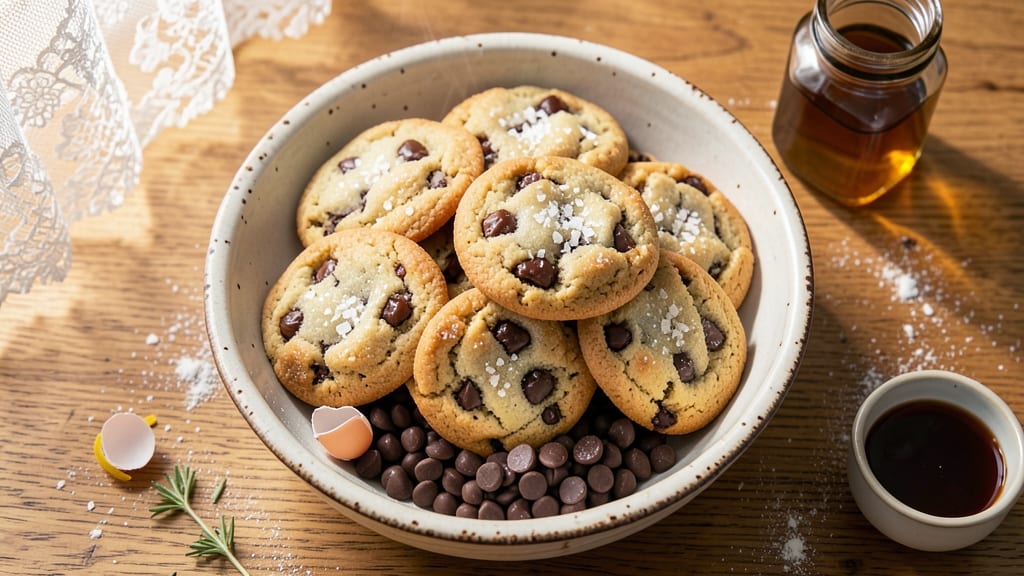
This 1939 Toll House cookie recipe brings back the original Nestlé chocolate chip cookie that started it all—rich, chewy, and packed with melty chocolate chunks. The secret lies in browned butter and a precise balance of sugar, creating that signature caramelized flavor and tender crumb.
I’ve baked these dozens of times, perfecting the texture so every batch delivers that nostalgic crunch.
What makes this recipe special is its authenticity—just like the original Toll House cookies from 1939, but with modern baker’s precision. The butter is browned to deepen the flavor, the dough rests for the perfect spread, and the chocolate stays gloriously gooey in the center.
No shortcuts here; this is the real deal, straight from the pages of history.
By the time these cookies emerge from the oven, you’ll have golden edges, a crackly top, and a chewy interior that melts in your mouth. The aroma alone—warm chocolate, vanilla, and toasted butter—will have everyone asking for seconds.
These aren’t just cookies; they’re a piece of baking history you can make in your own kitchen.
Serve them warm with a glass of milk, or let them cool slightly for that perfect balance of crisp and tender. The recipe scales easily, so whether you’re baking for a crowd or just treating yourself, these cookies never disappoint. Let’s get baking!
Ingredients for 1939 toll house cookie
Rich butter, two sugars, and chocolate chunks—everything you need for cookies that taste like history.
| Ingredient | Amount | Notes |
|---|---|---|
| Unsalted Butter 🧈 | 1 cup | Cold, cubed for browning |
| Granulated Sugar 🍚 | ¾ cup | White sugar preferred |
| Packed Brown Sugar 🍚 | ¾ cup | Light or dark works |
| Large Eggs 🥚 | 2 whole | Room temperature |
| Pure Vanilla Extract 🌿 | 2 tsp | Real vanilla preferred |
| All-Purpose Flour 🌾 | 3 ½ cups | Sifted for best texture |
| Baking Soda 🧂 | 1 tsp | Freshly opened |
| Salt 🧂 | 1 tsp | Diamond Crystal preferred |
| Semisweet Chocolate Chunks 🍫 | 2 cups | Nestlé Toll House brand |
| Granulated Sugar 🍚 | ½ cup | For topping (optional) |
| Flaky Sea Salt 🧂 | 1 tsp | For finishing (optional) |
The butter here isn’t just any butter—it’s cold, cubed butter you brown yourself for that deep, nutty flavor. Store-brand butter works fine, but if you want to splurge, go for European-style. The chocolate? Nestlé Toll House is the original, but any good-quality semisweet chunks (like Ghirardelli) will do. I always double-check the expiration date on chocolate—stale chocolate makes stale cookies. For the sugars, don’t skimp on the brown sugar—it’s what gives these cookies that signature chew and caramelized flavor.
No vanilla extract? Vanilla bean paste works too, or even a scraped vanilla bean if you’re feeling fancy. Short on chocolate? Chop a chocolate bar yourself—it melts better than pre-chopped. The flour needs to be sifted (trust me on this), and if you’re at high altitude, add an extra tablespoon. For the optional topping, I like to mix the sugar with a pinch of flaky salt before sprinkling—it’s a game-changer. And if you’re making these for a crowd, double the recipe, but don’t overcrowd the baking sheet or they’ll spread too much.
Browned butter keeps for 1 week in the fridge if stored in an airtight container, but it’s best used fresh. The dough can be chilled for up to 48 hours if you want to prep ahead—it actually improves the flavor. Baked cookies stay fresh for 5 days in an airtight container, but they’re best enjoyed warm. For extra-long storage, freeze the dough balls and bake straight from frozen—just add a minute to the baking time.
Why You'll Love This Recipe
- No-Fuss Mixing: I swear by the creamy butter and sugars—just cream, then fold in eggs and vanilla. No stand mixer required, just a sturdy bowl and a spatula. The dough comes together faster than I can finish my first cup of coffee.
- Chocolate-Chip Magic: That perfect balance of crisp edges and gooey centers? It’s all in the ratio of brown sugar to white—plus the classic chocolate chunks. Honestly, my kids will fight over the last one, and I don’t even bake them pretty.
- Party-Proof Favorite: Whether it’s a holiday cookie swap or a last-minute school bake sale, these hold up. I’ve frozen dough for months, and they still bake up like day one. (Yes, even on a Tuesday night.)
- Budget-Busting Staples: Butter, sugar, eggs—these are pantry basics that won’t break the bank. One batch feeds six, and leftovers? They disappear in my lunchbox for days. My secret weapon for stretching groceries without sacrificing flavor.
Step-by-step instructions for 1939 Toll House cookie recipe
Here's how to create those iconic chocolate chunk cookies just like Ruth Wakefield made them.
Cream Butter and Sugars to Perfect Lightness
In a large mixing bowl, combine the 1 cup unsalted butter (cold, cubed) with the 0.75 cup granulated sugar and 0.75 cup packed brown sugar. Using a hand mixer on medium speed, beat for 3-4 minutes until the mixture is light and fluffy with ribbons forming when the beaters are lifted.
This creaming process incorporates air, which creates those classic crackly tops and helps the cookies spread just right. If your butter isn't cold enough, the cookies may spread too much. I like to press the butter between two sheets of parchment before cubing to ensure it's firm enough for proper creaming.
Add Eggs and Vanilla for Rich Flavor
Add the 2 whole large eggs one at a time, mixing well after each addition until fully incorporated. Then add the 2 teaspoons pure vanilla extract and mix for another 30 seconds. The mixture should be smooth and slightly thickened.
Here's the thing—room temperature eggs blend more smoothly and create a better texture. If your eggs are straight from the fridge, let them sit in warm water for 5 minutes before using. The vanilla extract should be real, not imitation, for that authentic Toll House flavor that's been beloved since 1939.
Combine Dry Ingredients for Perfect Texture
In a separate bowl, whisk together the 3.5 cups all-purpose flour, 1 teaspoon baking soda, and 1 teaspoon salt. Gradually add this dry mixture to the wet ingredients, mixing on low speed just until combined. Be careful not to overmix—you should still see a few flour streaks when you lift the beaters.
Overmixing develops gluten, which makes cookies tough. The goal is to distribute the dry ingredients evenly without developing too much structure. I always sift the flour first to prevent lumps, which helps create that tender crumb we're after in classic Toll House cookies.
Fold in Chocolate Chunks for Maximum Crunch
Using a silicone spatula, gently fold in the 2 cups semisweet chocolate chunks until evenly distributed throughout the dough. The dough will be soft and slightly sticky—this is normal and perfect for creating those chewy centers with crispy edges.
Don't be tempted to overwork the dough at this stage. Just until the chocolate is evenly distributed is all you need. The Nestlé Toll House brand chocolate chunks are specifically designed for this recipe—they melt beautifully and create that signature chocolate crunch in every bite.
Chill and Shape for Perfect Cookies
Cover the dough bowl with plastic wrap and refrigerate for at least 30 minutes (I prefer 1 hour). This chilling step is crucial—it firms up the butter, prevents excessive spreading, and allows the flour to fully hydrate for better texture.
After chilling, preheat your oven to 375°F and line two baking sheets with parchment paper. Using a cookie scoop or tablespoon, drop 1-tablespoon portions of dough onto the prepared sheets, spacing them about 2 inches apart. The dough will hold its shape better after chilling, making it easier to portion evenly.
Bake to Golden Perfection
Bake the cookies for 9-11 minutes until the edges are golden brown but the centers still look slightly underdone. They'll continue cooking on the hot baking sheet after you remove them from the oven. Rotate the baking sheets halfway through for even baking.
This is where the magic happens—the cookies should have crisp edges with soft, chewy centers. If you prefer them crispier, bake for the full 11 minutes. For softer cookies, remove them at 9 minutes. Let them cool on the baking sheet for 5 minutes before transferring to a wire rack.
Finish with Sugar and Sea Salt (Optional)
While still warm, sprinkle each cookie with a pinch of the 0.5 cup granulated sugar and 1 teaspoon flaky sea salt for that classic Toll House touch. The sugar adds a delicate crunch while the sea salt enhances all the chocolate flavors.
These cookies keep well in an airtight container for up to 5 days, though I promise they won't last that long. The secret to their enduring popularity is that perfect balance of crisp edges, chewy centers, and rich chocolate chunks in every bite—just as Ruth Wakefield intended when she created this recipe in 1939.
Pro Tips For Making 1939 Toll House Cookie
- CREAM BUTTER SLOWLY: I learned this the hard way—dumping cold butter into the sugar mix makes for a greasy, uneven dough. Instead, cut the butter into tablespoons first, then mix it in gradually until it’s just combined. You want it soft but not melted, or your cookies will spread into sad, flat pancakes.
- MEASURE BROWN SUGAR RIGHT: Packed brown sugar isn’t just "loosely scooped." Use a damp spoon to press it firmly into the measuring cup—no air pockets. I skip this step half the time, and the dough always ends up drier, leading to cookies that crack as they bake. Trust me, the extra 10 seconds saves you from disappointment.
- CHILL DOUGH 30 MINUTES: Skipping the rest makes for thick, cakey cookies that don’t crisp up. Divide the dough into balls, then pop them in the fridge for at least 30 minutes. This isn’t optional—it’s what gives them that classic chewy center and crisp edges. (Yes, even if you’re impatient like me.)
- BAKE ONE SHEET AT A TIME: Crowding the pan turns Toll House cookies into hockey pucks. Use one sheet at a time, spacing balls 2 inches apart. I used to bake two sheets at once, and the edges always turned out doughy while the centers burned. The extra 10 minutes waiting for the oven to cool down is worth it.
Common mistakes when making this recipe
Overmixing the Dough
I’ve made this mistake more times than I’d admit—overmixing the dough after adding the dry ingredients. When you mix too long, you develop too much gluten, which turns your tender, chewy Toll House cookies into tough, cake-like disappointments.
The goal is to just combine until the flour disappears, leaving a few streaks visible. Use a spatula to gently fold in the chocolate chunks instead of mixing vigorously. Trust me, your cookies will thank you with that perfect texture. 🍪
Skipping the Chill
One of the most common mistakes is skipping the 30-minute (or better, 1-hour) chill in the fridge. Without this step, the butter stays too soft, causing your cookies to spread excessively into flat, sad discs. The chill also lets the flour hydrate properly, ensuring that tender crumb we all love.
Pro tip: If you’re in a hurry, pop the dough balls in the freezer for 15 minutes—it works in a pinch! ❄️
Overloading the Pan
Crowding your baking sheet with too many cookies is a recipe for disaster. When cookies bake too close together, they steam instead of crisp up, resulting in soft, uneven edges. Leave at least 2 inches between each dough ball.
If you’re short on space, bake in batches. I’ve learned this the hard way—trust the spacing, and you’ll get that perfect golden edge every time. 🔥
Using the Wrong Chocolate
Not all chocolate chunks are created equal. Pre-chopped chocolate or lower-quality bars can melt unevenly, leaving you with clumps instead of those glorious, gooey pockets. Stick to Nestlé Toll House or high-quality brands like Ghirardelli.
If using a bar, chop it yourself for even distribution. And for heaven’s sake, don’t skip the chocolate—it’s what makes these cookies legendary! 🍫
Baking Too Long
Patience is key here! Overbaking turns chewy centers into dry, rubbery cookies. The edges should be golden brown, but the centers should still look slightly soft when you pull them out.
They’ll firm up as they cool. If you’re unsure, pull them out at 9 minutes and check—you can always put them back in for another minute if needed. 🕒
Ignoring the Butter Temperature
Cold butter is your friend, but room-temperature butter is your enemy in this recipe. If your butter is too soft when you start creaming, your cookies will spread too much and lose that signature crackly top.
Press your butter between parchment paper before cubing to ensure it’s firm enough. And remember: browned butter is non-negotiable for that deep, nutty flavor. 🧈
Nutrition facts
Frequently asked questions
Why does this recipe use browned butter instead of regular butter?
The browned butter adds a deep, nutty flavor that makes these cookies taste like the original 1939 Toll House recipe. The Maillard reaction during browning creates complex caramelized notes that regular butter can't match. It's what gives these cookies that signature rich, toasty flavor that's been loved for generations.
Can I make these cookies without eggs?
Yes, but the texture will change. Replace the 2 eggs with 2 tablespoons ground flaxseed + 6 tablespoons water (let sit for 5 minutes to thicken). For a neutral flavor, use 1/2 cup unsweetened applesauce or 1/2 cup yogurt. The cookies will be slightly less tender but still delicious. For best results, use the flax egg for a closer texture match.
How do I store these cookies to keep them fresh?
Store in an airtight container at room temperature for up to 5 days—they're best enjoyed within 2 days for maximum freshness. For longer storage, freeze the dough balls (unbaked) for up to 3 months or baked cookies for 2 months. Thaw frozen dough balls at room temperature before baking. The secret to freshness is keeping them away from moisture and light.
What's the best way to reheat stale Toll House cookies?
Place cookies on a baking sheet and warm in a 300°F oven for 3-5 minutes until edges are crisp again. For microwave reheating, wrap in a damp paper towel and heat for 10-15 seconds. The key is low heat—high heat makes them rubbery. A quick warm-up brings back that fresh-baked aroma and texture. Perfect for when you want that warm-from-the-oven experience anytime!
Can I use white chocolate instead of semisweet?
While you can substitute white chocolate, it changes the classic flavor profile. For best results, stick with semisweet chocolate chunks (60-70% cacao). If you must use white chocolate, reduce the amount to 1.5 cups and add 0.5 cup milk chocolate chunks to maintain balance. The original recipe relies on the rich, slightly bitter notes of semisweet chocolate for that authentic Toll House taste.