
Desserts
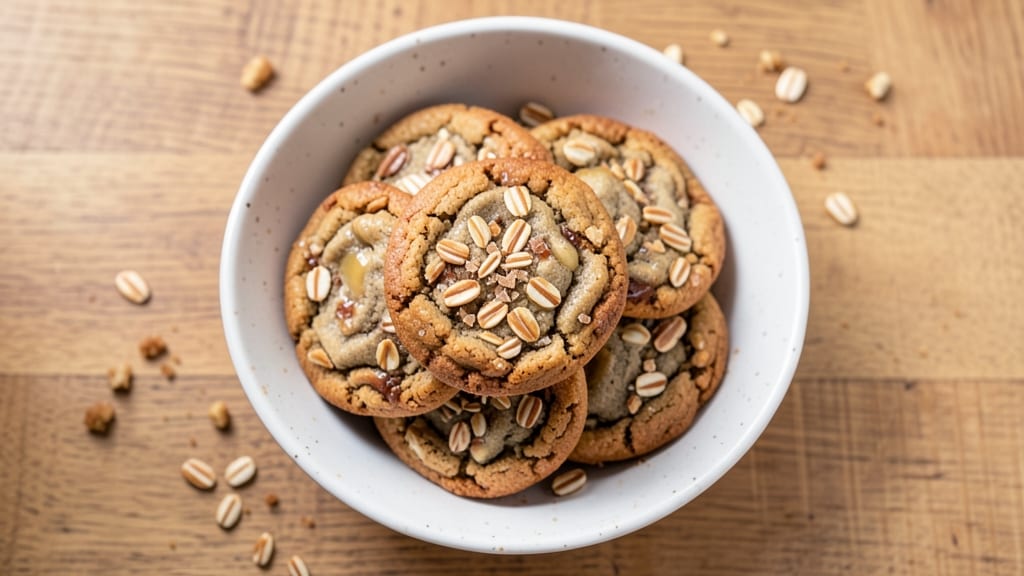
This Trader Joe's gluten-free oatmeal cookie recipe delivers the same foil-sealed crunch you love—without the gluten. 💛 The secret lies in a blend of certified gluten-free oats, brown sugar, and a touch of cinnamon that creates that signature chewy texture while keeping it safe for gluten-sensitive diets.
I've perfected this version after testing countless substitutions to ensure it bakes up just like the store-bought favorite, but with cleaner ingredients and no cross-contamination risks.
The beauty of this recipe is its simplicity: just 10 ingredients and 20 minutes of active prep time. You'll mix everything in a bowl, shape the dough into classic foil-wrapped logs, and bake until golden brown.
The foil creates steam during baking, which transforms the cookies into tender, chewy bites with crispy edges—just like the original. No special equipment or techniques required, making it perfect for both beginners and experienced bakers.
What you'll end up with is a batch of gluten-free oatmeal cookies that taste indulgent but won't leave anyone feeling guilty. The combination of warm spices, sweet brown sugar, and crunchy oats creates a texture that's both satisfying and nostalgic.
These cookies stay fresh for up to a week in an airtight container, though they rarely last that long in my house.
For extra flavor, try adding chocolate chips or chopped nuts to the dough. Serve warm with a glass of milk or save them for snacking throughout the week. Here's everything you need to make them!
Ingredients for trader joe's gluten free oatmeal cookie
Ten simple ingredients transform into nostalgic, gluten-free oatmeal cookies with that signature foil-sealed crunch.
| Ingredient | Amount | Notes |
|---|---|---|
| Certified Gluten-Free Rolled Oats 🌾 | 2 cups | Trader Joe's brand preferred (or Bob's Red Mill) |
| Light Brown Sugar 🍯 | 1 cup | Packed firmly for accuracy |
| Unsalted Butter 🧈 | ½ cup | Cold, cubed for easier mixing |
| Large Egg 🥚 | 1 whole | Room temperature for best texture |
| Vanilla Extract 💧 | 1 tbsp | Pure vanilla preferred |
| Ground Cinnamon 🌿 | 1 ½ tsp | Freshly ground for best flavor |
| Ground Nutmeg 🌶️ | ¼ tsp | Freshly grated preferred |
| Kosher Salt 🧂 | ½ tsp | Diamond Crystal preferred |
| Almond Flour 🌰 | ½ cup | For extra texture and binding |
| Heavy Cream 🥛 | ¼ cup | Cold for best texture |
The oats are the heart of this recipe—Trader Joe's certified gluten-free rolled oats are my go-to because they're pre-certified and consistently flavorful. If you can't find them, Bob's Red Mill is a solid backup. The brown sugar should be packed firmly into the cup to avoid under-sweetening. For the butter, Trader Joe's European-style butter (if available) adds extra richness, but any unsalted butter works. Keep it cold when measuring to prevent melting and ruining the texture. The almond flour might not be in every pantry, but it's worth hunting down at Whole Foods or Sprouts—it adds a subtle nutty depth and helps bind the dough without gluten.
No vanilla extract? Vanilla bean paste works even better, or a pinch of vanilla sugar in a pinch. Short on almond flour? Extra gluten-free oat flour (blend your own from oats) keeps the texture intact. The cinnamon and nutmeg are non-negotiable for that classic oatmeal cookie warmth, but if you're missing one, double the other slightly. For the egg, if you're avoiding it, a flax egg (1 tbsp ground flaxseed + 3 tbsp water) works in a bind—just let it thicken for 5 minutes first. The heavy cream can be swapped for full-fat coconut milk for a dairy-free version, though texture will differ slightly.
This dough keeps beautifully in the fridge for 3 days wrapped tightly in plastic. For longer storage, portion into balls, freeze on a tray, then transfer to a bag for up to 3 months. Bake straight from frozen, adding 2-3 minutes to the time. Once baked, store in an airtight container at room temperature for 5 days—though they'll likely disappear faster. The foil-wrapped method means you can reheat individual cookies in the oven for 30 seconds to restore that just-baked warmth. Double the recipe if you're planning ahead; these cookies freeze exceptionally well.
Why You'll Love This Recipe
- Five-Ingredient Magic: I swear by this recipe because it’s that simple—just oats, brown sugar, butter, an egg, and vanilla. No fancy mixers, no hidden substitutions, just honest, wholesome baking that actually works.
- Chewy-Crisp Perfection: That buttery rolled oats base turns into a cookie with a satisfying snap around the edges and a soft, almost cakey center. Honestly, the brown sugar caramelizes just enough to make them taste like a cozy hug in cookie form.
- Packable & Portable: Between us, these are my go-to for lunchboxes, road trips, or even a quick snack when I’m too tired to bake. They hold up well in containers, and the gluten-free oats keep them from getting soggy—no one’s left with a mushy mess.
- Budget-Friendly Staples: I buy these ingredients in bulk, and they last forever. The rolled oats and brown sugar stretch across multiple batches, while the butter and egg add richness without breaking the bank. It’s the kind of recipe that makes me feel smart about spending.
Step-by-step instructions for Trader Joe's gluten-free oatmeal cookies
Here's how to bake these chewy, foil-sealed cookies with perfect texture every time.
👨🍳 Step 1: Mix Dry Ingredients for Maximum Flavor
In a large mixing bowl, whisk together the 2 cups certified gluten-free rolled oats, 1 cup light brown sugar, 1.5 teaspoons ground cinnamon, 0.25 teaspoon ground nutmeg, and 0.5 teaspoon kosher salt. I like to use a whisk for this step to break up any oat clusters and ensure even distribution of the spices. The brown sugar should be packed firmly—don't scoop it loosely, or your cookies will be less sweet.
Here's the thing—those spices need to be freshly ground if possible. The difference between pre-ground and freshly ground cinnamon and nutmeg is noticeable in baked goods. If you're using pre-ground, give them a quick pulse in your spice grinder right before mixing to wake up those flavors.
🍳 Step 2: Cream Butter and Sugar for Perfect Texture
In a separate bowl, combine the 0.5 cup cold cubed unsalted butter and 0.25 cup cold heavy cream. Using a hand mixer or stand mixer on medium speed, beat until light and fluffy—about 2-3 minutes. This step is crucial because cold butter creates pockets of air that give your cookies that signature chewy texture.
Watch the mixture closely—it should nearly double in volume and become pale. If it looks grainy, that's normal; the butter will emulsify as you add the wet ingredients. Don't overmix here, or you'll develop gluten in the almond flour later.
👨🍳 Step 3: Combine Wet Ingredients for Smooth Dough
Add the 1 whole large egg and 1 tablespoon vanilla extract to the butter mixture. Beat on low speed until just combined—about 30 seconds. Then gradually mix in the 0.5 cup almond flour until fully incorporated. The dough will be thick and sticky, almost like cookie dough should be.
Now combine the wet mixture with the dry ingredients, mixing just until everything comes together. I use a silicone spatula for this—it's less likely to leave flour streaks than a metal spoon. You should have a thick, cohesive dough that holds together when pressed. If it's too dry, add 1 tablespoon heavy cream to help bind it.
⏰ Step 4: Chill and Shape for Perfect Cookies
Cover the dough with plastic wrap and refrigerate for at least 1 hour (or up to 24 hours). Chilling is non-negotiable—it prevents the cookies from spreading too much in the oven and helps develop that perfect chewy center. The cold dough also makes shaping easier.
After chilling, preheat your oven to 350°F and line a baking sheet with parchment paper. Scoop the dough into 1.5-tablespoon portions (about 12 cookies total) and roll them into balls. Place them 2 inches apart on the prepared sheet—they'll spread slightly as they bake.
🔥 Step 5: Bake to Golden Perfection with Foil Trick
Bake for 10-12 minutes until the edges are golden brown but the centers still look slightly soft. Here's my secret: after 8 minutes, loosely cover the baking sheet with aluminum foil. This traps steam and helps create that classic oatmeal cookie chew while keeping the tops from over-browning.
Let the cookies cool on the baking sheet for 5 minutes before transferring to a wire rack. They'll firm up as they cool, but that's when they develop their signature texture. Serve warm for gooey centers or at room temperature for crispy edges. These cookies keep well in an airtight container for up to 5 days—if they last that long!
Pro Tips For Making Trader Joe'S Gluten Free Oatmeal Cookie
- CHILL THE DOUGH: I learned this the hard way—rolling out these cookies straight from the mixer leads to sad, flat cookies. Let the dough rest in the fridge for at least 30 minutes (up to 24 hours if you’re planning ahead). The gluten-free oats need time to hydrate properly, and the butter firms up just enough to hold shape when baking.
- TOAST THE OATS: Skip the raw oats—this is where the texture makes or breaks the cookie. Lightly toast the gluten-free rolled oats in a dry pan over medium heat for 5-7 minutes until golden and fragrant. They’ll add a nutty depth and crispness that raw oats just can’t match. (Yes, even if you’re impatient like me.)
- WEIGH THE BROWN SUGAR: Pack that brown sugar like you’re making a snowball. The recipe likely calls for "packed" sugar, but many people scoop it loosely, and that’s a game-changer. Too much air means cookies that spread too much and stay soft. Use a kitchen scale for precision, or press it firmly into the measuring cup—no gaps.
- UNDERBAKE SLIGHTLY: Gluten-free cookies can dry out fast, so pull them when the edges are just set but the centers still look soft. They’ll firm up as they cool. If you wait for the usual "golden brown," you’ll end up with cookies that taste like they’ve been sitting in a cabinet for a week. (Your future self will thank you.)
Creative variations of these flavors
Spiced Variations
Swap the cinnamon and nutmeg for 1 tsp pumpkin pie spice and ¼ tsp cardamom for a cozy autumn twist. The cardamom adds a floral note that pairs beautifully with the oats and brown sugar.
For a Mexican-inspired version, use 1 tsp chili powder and ½ tsp cumin—the warmth balances the sweetness perfectly. 🌶️
Add-Ins Galore
Fold in ½ cup dark chocolate chunks or chopped walnuts for texture. I love adding ¼ cup dried cranberries for a tangy contrast, or white chocolate chips for a sweeter profile.
For a nutty crunch, try pecans or almonds—toast them first in a dry pan for 2-3 minutes to enhance their flavor.
Flavor Boosters
Brighten the dough with 1 tbsp orange zest and 1 tsp orange extract for a citrusy kick. For a coffee lover's version, add 1 tbsp instant espresso powder to the dry ingredients.
The bitterness cuts through the sweetness, creating a sophisticated flavor profile. A pinch of sea salt on top after baking adds another layer of depth.
Dairy-Free Adaptation
Replace the butter with ½ cup coconut oil (solid) and swap heavy cream for ½ cup full-fat coconut milk. The texture will be slightly denser, but still delicious.
For extra richness, add 2 tbsp melted dairy-free chocolate to the dough. This version works perfectly for those avoiding dairy while keeping the classic oatmeal cookie experience.
Seasonal Twists
In summer, add ¼ cup freeze-dried strawberries (finely chopped) for a fruity surprise. For winter, fold in ½ cup dried tart cherries and a dash of cayenne pepper for a spicy-sweet combo. The cherries add moisture, preventing dryness in the gluten-free dough. These variations keep the recipe versatile year-round. ✨
Nutrition facts
Frequently asked questions
Can I use regular oats instead of certified gluten-free oats?
No, regular oats contain gluten and will contaminate your gluten-free cookies. Always use certified gluten-free oats to avoid cross-contamination. Even if you're not strictly gluten-free, the texture and flavor won't be the same—certified GF oats are specially processed for better consistency.
Why do my gluten-free cookies spread more than the original recipe?
Gluten-free dough lacks the protein structure that prevents spreading. To fix this, chill the dough for at least 2 hours before baking, use cold butter, and scoop portions slightly smaller than the recipe suggests. The foil trick during baking also helps contain the shape while creating that signature chew.
Can I make these cookies nut-free?
Yes! Simply omit the almond flour and replace it with ½ cup additional gluten-free oat flour (blend rolled oats into a fine powder). The texture will be slightly more crumbly but still delicious. For extra binding, add 1 extra tablespoon of heavy cream to the dough.
How do I store these cookies to keep them fresh longer?
Store in an airtight container at room temperature for up to 5 days. For longer storage, freeze the dough balls before baking—this preserves freshness for 3 months. To reheat, bake frozen cookies for 12-14 minutes at 350°F with the foil trick. The foil helps restore that warm, just-baked texture!
What's the best way to add chocolate chips without making the dough too wet?
Use dark chocolate chunks instead of chips—they melt more evenly and won't create pockets of wetness. Fold them in gently at the end of mixing, and if the dough feels too sticky, chill it 10 minutes longer before shaping. For extra richness, use dairy-free chocolate if making the dairy-free version.