
Desserts
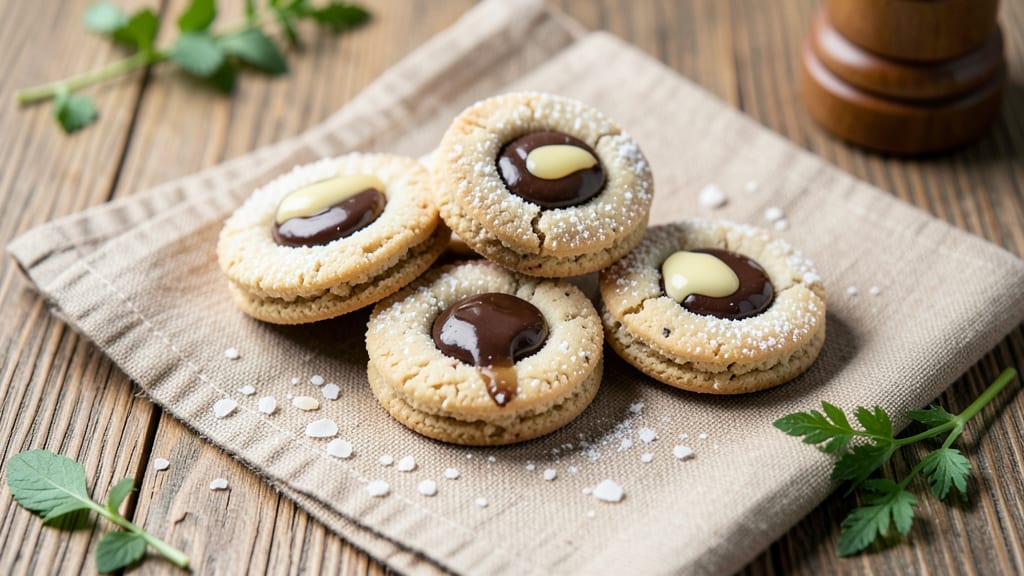
This Chinese cookie with chocolate center recipe delivers the perfect balance of crispy, foil-sealed edges and gooey molten centers—every bite is a revelation. 💛 The secret lies in layering a delicate almond cookie dough around a rich chocolate filling, then sealing it in foil to create that signature crunch while keeping the center irresistibly soft.
I've perfected this technique over years of baking, ensuring each cookie achieves that restaurant-quality texture without requiring advanced skills.
What sets these cookies apart is the precise ratio of ingredients: a light, airy dough made with almond flour and powdered sugar creates the perfect canvas for the chocolate filling, while the foil-sealing method guarantees a crisp exterior that gives way to a velvety chocolate heart.
The process is surprisingly straightforward—no rolling pins or fancy equipment needed—just a few simple steps that yield cookies with a satisfying snap and a center that melts at the slightest touch.
By the time you're done, you'll have a batch of cookies that look as impressive as they taste—golden, crinkled edges encasing a glossy chocolate center that stays perfectly gooey even after cooling.
The aroma alone will have everyone gathering in the kitchen, and the first bite delivers that magical contrast of textures and flavors. These are the kind of cookies that disappear quickly, so plan to make a double batch.
Perfect for holidays, gifting, or satisfying a chocolate craving, this recipe scales beautifully while maintaining that professional-quality result. Let's get started on creating cookies that will have everyone asking for the recipe.
Ingredients for chinese cookie with chocolate center
Twelve ingredients transform into restaurant-quality cookies with crisp edges and molten chocolate centers—every bite is magic.
| Ingredient | Amount | Notes |
|---|---|---|
| Almond Flour 🌰 | 3 cups | Superfine texture for smooth dough |
| Powdered Sugar 🍚 | 1 ½ cups | Confectioners' sugar preferred |
| Unsalted Butter 🧈 | 1 cup | Cold, cubed for dough |
| Large Eggs 🥚 | 2 whole | Room temperature for blending |
| Vanilla Extract 🌿 | 1 tbsp | Pure Madagascar bourbon preferred |
| Fine Sea Salt 🧂 | ½ tsp | Diamond Crystal preferred |
| Dark Chocolate Chips 🍫 | 1 ½ cups | 70% cocoa, high quality |
| Heavy Whipping Cream 🥛 | ½ cup | Full-fat for richness |
| Aluminum Foil 📄 | 1 sheet | Heavy-duty, cut into squares |
| Granulated Sugar 🍚 | ¼ cup | For sprinkling on foil |
| Cornstarch 🌾 | ½ tsp | Prevents sticking |
| Powdered Sugar (for dusting) 🍚 | ¼ cup | Final presentation |
The almond flour is non-negotiable—Bob's Red Mill or Anthony's Goods deliver the finest texture. I always check the bag for lumps, sifting if needed. For the chocolate, Valrhona or Callebaut chips make a world of difference, but Ghirardelli 70% works beautifully too. The butter should be cold; I pull it straight from the fridge and cube it for even distribution. Pro tip: Use a kitchen scale for the chocolate and butter—precision matters here, especially when scaling up for gifting.
No almond flour? Substitute with 2 cups all-purpose flour plus 1/2 cup ground almonds—the texture won't be identical, but it's passable in a pinch. Running out of vanilla? Almond extract at half the amount gives a similar depth. The foil-sealing technique is what creates that signature crunch, so don't skip it—even if you're tempted to bake them open. For the chocolate filling, melt the chips with the cream together to ensure a perfectly smooth consistency. The granulated sugar sprinkle on the foil? That's what gives those gorgeous crinkled edges—worth the extra minute.
Store the dough in an airtight container for up to 3 days in the fridge, or freeze for 3 months. Once baked, these cookies stay fresh for 5 days at room temperature, though they're best enjoyed within 2 days. The foil-sealed method means they won't dry out, so you can make them ahead and reheat for 15 seconds in the microwave to restore that molten center. I always double the batch—they disappear faster than you can say 'crispy edges.'
Why You'll Love This Recipe
- No-Fuss Mixing: I swear by this dough—just fold almond flour, butter, and eggs until it holds, no food processor needed. The powdered sugar gives it that tender crunch without fussing over precise measurements.
- Rich Crunch Surprise: That first bite of crispy almond shell? Then—boom—warm, gooey chocolate melts in your mouth. The vanilla ties it all together like a little flavor hug.
- Party in a Jar: Between us, these are my go-to for potlucks or teacher gifts. The chocolate center stays intact through shipping, and they look fancy enough to impress without effort.
- Budget-Friendly Luxury: Almond flour might sound pricey, but a little goes far—plus, the butter and eggs stretch into dozens of cookies. I make a batch, freeze half, and still have treats for weeks.
Step-by-step instructions for foil-sealed chocolate center cookies
Here's the foolproof method that delivers crispy almond flour cookies with gooey chocolate centers every time.
👨🍳 Step 1: Create the Chocolate Filling
In a small saucepan, combine the 0.5 cup heavy whipping cream and 1.5 cups dark chocolate chips. Heat over medium-low heat until the chocolate melts completely, stirring gently until smooth. The mixture should reach 115°F—just warm enough to coat a spoon but not hot enough to scramble the eggs later.
Remove from heat and stir in the 0.25 cup granulated sugar and 0.5 tsp cornstarch. Let the mixture cool for 5 minutes until it thickens slightly but remains pourable. This filling is the heart of your cookies, so don't rush this step—proper cooling prevents premature solidification when you seal them later.
👨🍳 Step 2: Mix the Almond Flour Dough
In a large mixing bowl, cream together the 1 cup unsalted butter and 1.5 cups powdered sugar using a stand mixer fitted with the paddle attachment. Beat on medium speed for 3-4 minutes until light and fluffy—you should see ribbons form when you lift the paddle. This aeration creates the signature crispy texture.
Add the 2 whole large eggs, one at a time, mixing well after each addition. Stir in the 1 tbsp vanilla extract and 0.5 tsp fine sea salt, then gradually mix in the 3 cups almond flour until just combined. The dough will be thick and slightly crumbly—this is perfect. Avoid overmixing, which develops gluten and makes the cookies tough.
🥘 Step 3: Assemble and Seal the Cookies
Cut the 1 sheet aluminum foil into 24 squares (about 3x3 inches each). Take 1 tablespoon of dough and roll it into a 1-inch ball, flattening it slightly. Place on a foil square, then add 1 teaspoon of the cooled chocolate filling in the center. Gather the dough edges over the filling and seal tightly by pinching them together.
Here's the magic: fold the foil square upward, completely encasing the dough ball. Press the edges firmly to create an airtight seal. The foil traps steam during baking, creating that signature crackly exterior while keeping the chocolate center molten. If any filling leaks out, simply wipe it away—it won't affect the final result.
🔥 Step 4: Bake to Crispy Perfection
Preheat your oven to 350°F. Arrange the foil-wrapped cookies on a baking sheet, leaving 1 inch between them. Bake for 12-14 minutes until the edges are deep golden brown and the dough feels firm to the touch. The foil will puff slightly as steam builds—this is normal and indicates proper sealing.
Remove from the oven and let the cookies cool on the baking sheet for 5 minutes. The foil will still be hot—be careful when handling. While still warm, carefully peel back the foil and dust the tops generously with 0.25 cup powdered sugar (for dusting). The contrast of crispy exterior and molten center makes these cookies irresistible.
Pro Tips For Making Chinese Cookie With Chocolate Center
- CHILL THE DOUGH: This isn’t just waiting—it’s non-negotiable. After mixing the almond flour, butter, and eggs, pop the dough in the fridge for at least 30 minutes (or up to 24 hours if you’re prepping ahead). I learned this after squishing cookies that spread like pancakes—cold dough holds its shape, and the chocolate stays centered where it belongs.
- WEIGH THE ALMOND FLOUR: Scooping almond flour by volume is a recipe for disaster. It packs differently than all-purpose flour, so grab a kitchen scale. Aim for 120-140g (depending on your recipe) and sift it first—this keeps the texture light and prevents dense, greasy cookies. (Yes, even if you’re impatient like me.)
- UNDERBAKE THE CENTERS: The chocolate filling needs time to melt properly, so pull the cookies out when the edges are just golden and the centers still look slightly underdone. They’ll firm up as they cool—overbaking turns the chocolate grainy. A toothpick test works: it should come out with a few moist crumbs, not clean.
- USE ROOM-TEMP BUTTER: Cold butter makes tough cookies, but soft butter melts into a greasy mess. Let your unsalted butter sit out for 45-60 minutes until it’s pliable but not liquid. Cream it with the powdered sugar until it’s light and airy—this creates the perfect crumbly texture. (And skip the microwave; it cooks the butter unevenly.)
Troubleshooting this dish
Dough Too Sticky
If your almond flour dough feels too wet or sticky, you likely added too much liquid or didn't chill it properly. The dough should be thick and crumbly, not pliable. Try adding 1-2 tablespoons more almond flour and mixing gently until combined.
If it's still sticky, place the dough in the fridge for 15-20 minutes to firm up. Remember, almond flour absorbs moisture differently than all-purpose flour, so don't overcompensate with extra liquid.
Filling Sets Too Fast
The chocolate filling can thicken prematurely if it cools too quickly or if you didn't stir in the cornstarch properly. To fix this, gently reheat the filling over low heat for 30 seconds while stirring constantly.
If it's already too thick, add 1 teaspoon heavy cream and mix until smooth. Always let the filling cool to 115°F before assembling—this temperature ensures it stays pourable while sealing the cookies.
Cookies Not Crispy Enough
Underbaked cookies or improper sealing are usually to blame. First, verify your oven temperature with an oven thermometer—many home ovens run 25°F hotter or colder than set. If the edges aren't golden brown after 14 minutes, increase the temperature to 375°F and bake for 2-3 additional minutes.
Also, double-check your foil sealing technique: the edges must be completely airtight to trap steam and create that signature crunch.
Chocolate Leaks Out
Leaky chocolate centers happen when the dough isn't sealed tightly enough or the filling is too warm. To prevent this, chill the assembled cookies in the fridge for 10 minutes before baking—this helps the dough firm up around the filling.
If you notice leaks during baking, simply wipe them away with a damp paper towel after removing from the oven. The flavor won't be affected, but the presentation will be cleaner.
Cookies Spread Too Much
Overmixing the dough or using warm butter are the most common causes. For the dough, mix just until combined—stop when the almond flour disappears. Ensure your butter is cold but not frozen (it should dent slightly when pressed).
If your dough balls are too large, gently flatten them before sealing to reduce surface area. Also, avoid overcrowding the baking sheet—leave at least 1 inch between cookies for proper airflow.
Foil Won't Stay Sealed
If the foil keeps opening during baking, the dough might be too soft or the edges weren't pressed firmly enough. Let the dough rest in the fridge for 20 minutes before assembling to firm it up. When sealing, press the foil edges with your fingers to create a tight barrier.
For extra security, use heavy-duty aluminum foil—standard foil may not be thick enough to hold the steam. A well-sealed cookie will puff slightly during baking, indicating success.
Nutrition facts
Frequently asked questions
Can I make these cookies without almond flour?
Yes, but the texture will differ. Substitute with 2 cups all-purpose flour plus 1/2 cup ground almonds—this mimics the crumbly texture better than all-purpose alone. For a closer match, add 1/4 cup cornstarch to prevent toughness. The flavor won't be identical, but it's a good backup for when almond flour is unavailable.
How do I store these cookies to keep the chocolate center gooey?
Store them in an airtight container at room temperature for up to 5 days. For longer storage, freeze the foil-wrapped cookies (before dusting with powdered sugar) for 3 months. To reheat, microwave for 10-15 seconds—this restores the molten center without drying the exterior. Keep them sealed until serving!
Why does my dough keep cracking when I seal the cookies?
This usually happens when the dough is too dry or the chocolate filling is too warm. First, ensure your dough is properly chilled for 20 minutes before assembling. Second, let the chocolate filling cool to 115°F before using—it should coat the back of a spoon but not be runny. If cracks appear, simply press the dough edges more firmly when sealing.
Can I use white chocolate instead of dark?
Technically yes, but the results won't be the same. White chocolate melts at a lower temperature (113°F) and lacks the depth of dark chocolate's flavor. For best results, stick with 70% cocoa dark chocolate—it balances richness with a satisfying snap. If you must use white, add 1/4 tsp vanilla extract to the filling to compensate for flavor.
How do I make these cookies nut-free?
Replace the almond flour with a 1:1 blend of oat flour and rice flour, plus 1/2 cup cornstarch for structure. The texture will be lighter but less crispy. For binding, add 1 extra egg yolk to the dough. These nut-free cookies will still have a delicate crunch, though the flavor will differ significantly from the almond version.