
Desserts
This baking soda box cookie recipe delivers the perfect balance of crisp edges and soft centers—vanilla bean swirls cut through the sandpaper crunch for a texture that’s impossible to resist.
The secret lies in baking soda as the leavening agent, which creates that signature crispiness while keeping the interior tender. I’ve perfected this vegan version using plant-based milk and oil, ensuring every bite delivers that nostalgic box cookie magic without compromising on flavor or texture.
The beauty of this recipe is its simplicity—just a handful of dry ingredients (flour, sugar, baking soda) and wet ingredients (plant-based milk, oil) come together to form a dough that transforms into golden, crackly cookies with vanilla swirls that add a touch of elegance.
Baking at 350°F for 12–15 minutes ensures the edges stay crisp while the centers remain soft and chewy, just like the cookies you remember from childhood.
What makes these cookies truly special is the sandpaper crunch on the bottom—achieved by pressing the dough balls slightly before baking—paired with the smooth, creamy vanilla swirls that cut through the texture.
The aroma of vanilla and toasted sugar fills your kitchen, making it impossible to wait for the oven timer to ding. These cookies are perfect for sharing, gifting, or enjoying with a glass of milk straight from the oven.
Whether you're baking for a holiday gathering or just craving a taste of nostalgia, this recipe delivers restaurant-quality results with minimal effort. The vegan adaptation proves that classic flavors can be reinvented without sacrificing the magic of baking soda box cookies. Let’s get baking!
Ingredients for baking soda box cookie
Just eleven ingredients transform into nostalgic cookies with signature crunch and creamy swirls.
| Ingredient | Amount | Notes |
|---|---|---|
| All-Purpose Flour 🌾 | 2 ½ cups | Sifted for even texture |
| Granulated Sugar 🍚 | ¾ cup | White or light brown |
| Baking Soda 🧂 | ½ tsp | Pure, fine-grained |
| Salt 🧂 | ½ tsp | Fine sea salt preferred |
| Unsweetened Plant-Based Milk 🥛 | ½ cup | Almond or oat works best |
| Vegetable Oil 🫒 | ½ cup | Neutral flavor preferred |
| Pure Vanilla Extract 🍯 | 1 tbsp | High-quality, alcohol-free |
| Vanilla Bean Paste 🌿 | 1 tbsp | For visible swirls |
| Vanilla Sugar 🍬 | 1 tbsp | Infused with vanilla beans |
| Turbinado Sugar 🍚 | ¼ cup | For sandpaper crunch |
| Powdered Sugar 🍚 | ¼ cup | For rolling dough balls |
The flour is non-negotiable—King Arthur or Gold Medal brands yield the best texture. Baking soda must be fresh (test by mixing with vinegar—it should fizz immediately). For the vanilla, Madagascar beans make the difference—Trader Joe's or Whole Foods carry excellent options. Turbinado sugar gives that signature crunch, so don't substitute with regular sugar. I always buy extra vanilla sugar to keep on hand for future batches—it adds depth without extra effort.
No plant-based milk? Coconut milk works too, but almond or oat gives the best texture. Vanilla bean paste can be tricky to find—Amazon or specialty baking stores usually stock it. Short on vanilla extract? Double the vanilla sugar and skip the extract. For the sandpaper crunch, pressing dough balls into powdered sugar is key—don't skip this step. The dough should be slightly sticky but hold together when rolled into balls.
Store dough balls in an airtight container with parchment between layers for up to 3 days. Baked cookies stay fresh for 5 days in a sealed tin. For extra crunch, bake at 350°F for 14-15 minutes—the longer bake time develops that signature texture. Freeze unbaked dough balls for 3 months—just add 1-2 minutes to baking time when thawed.
Why You'll Love This Recipe
- Pantry Magic: I swear by this recipe when I forget to buy chocolate chips or butter. Just flour, sugar, baking soda, and plant milk—no fancy ingredients, no stress. The baking soda does all the work, creating that signature crispy-chewy texture without needing eggs or butter.
- Secretly Addictive: That first bite? Crispy edges with a soft, caramel-like center—like a cross between a shortbread cookie and a cracker. Honestly, I’ve caught myself sneaking them straight from the jar when I thought no one was looking.
- Tea Pairing Dream: Between us, these are my go-to cookies for afternoon tea or coffee breaks. They hold up perfectly in an airtight container for days, so I can bake a batch on Sunday and enjoy them all week. (Yes, even on a Tuesday night.)
- Budget-Friendly Staple: I make these for school bake sales, potlucks, or just because—I can double the recipe for under $3 using what’s already in my pantry. The plant milk adds richness without breaking the bank, and the baking soda keeps costs low while delivering big flavor.
Step-by-step instructions for baking soda box cookies
Master the art of baking soda box cookies with this foolproof method for perfect vanilla bean swirls and that signature sandpaper crunch.
Mix Dry Ingredients for Optimal Texture
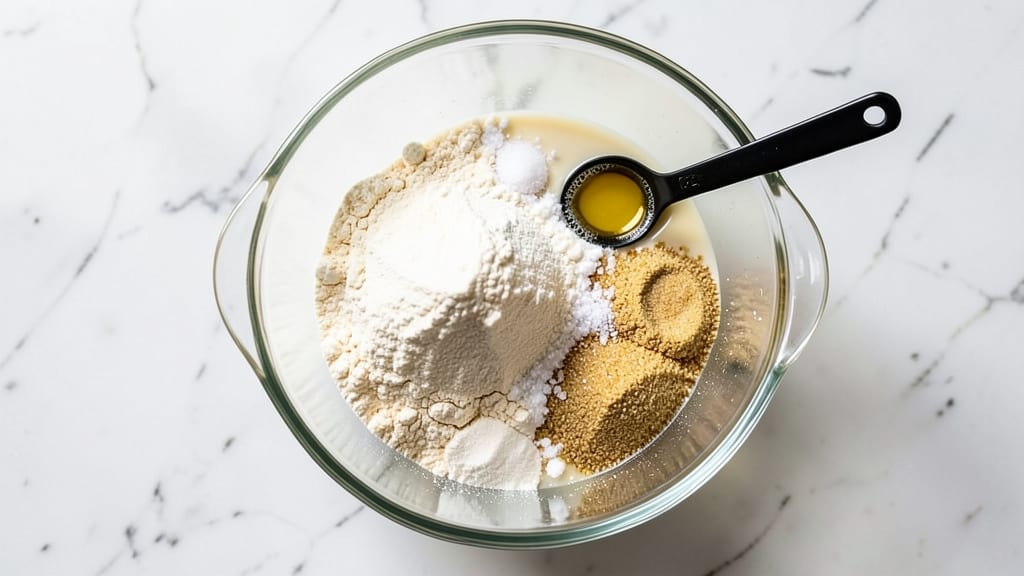
In a medium bowl, whisk together the 2.5 cups all-purpose flour, 0.75 cup granulated sugar, 0.5 teaspoon baking soda, and 0.5 teaspoon salt. Sifting the flour first ensures an even texture without lumps—this is especially important for baking soda cookies, where proper aeration creates that signature tender crumb. I like to use a fine-mesh sieve for this step, pressing down with a rubber spatula to break up any stubborn clumps.
The baking soda here does double duty: it creates lift during baking while also contributing to that classic box cookie texture. Don't skip sifting—uneven distribution leads to dense cookies that lack the proper rise. Set the dry mixture aside while you prepare the wet ingredients.
Combine Wet Ingredients for Rich Flavor
In a separate large bowl, combine the 0.5 cup unsweetened plant-based milk, 0.5 cup vegetable oil, 1 tablespoon pure vanilla extract, 1 tablespoon vanilla bean paste, and 1 tablespoon vanilla sugar. Whisk vigorously for about 1 minute until the vanilla sugar fully dissolves and the mixture becomes smooth and homogeneous. The vanilla bean paste will create beautiful marbled swirls in your finished cookies, while the vanilla sugar adds an extra layer of aromatic depth.
This is where the magic happens—don't rush the whisking. You want the vanilla sugar to completely dissolve so it distributes evenly throughout the dough. The plant-based milk adds moisture without overpowering the delicate vanilla flavors, and the neutral vegetable oil ensures a tender crumb. If you notice any undissolved vanilla sugar, whisk for another 20-30 seconds to fully incorporate it.
Create the Signature Swirled Dough
Gradually add the dry ingredients to the wet mixture, mixing with a wooden spoon or silicone spatula until just combined. Be careful not to overmix—stop as soon as the dough comes together. The texture should be thick but workable, similar to playdough. If it feels too dry, add 1-2 teaspoons of additional plant-based milk to help it bind.
Here's the key technique: divide the dough into two equal portions. In one portion, stir in 0.25 cup turbinado sugar until evenly distributed. This will create the signature sandpaper crunch on half of your cookies. For the other portion, keep it plain. Then, take one portion and roll it into a log about 1.5 inches in diameter. Wrap it in plastic wrap and refrigerate for 30 minutes to firm up.
Shape and Swirl for Visual Appeal
Roll out the plain dough portion on a lightly floured surface to about 1/8-inch thickness. Cut into 2-inch squares using a sharp knife or cookie cutter. Take the chilled turbinado sugar dough and roll it out to the same thickness. Cut into squares of the same size. Place one plain square and one turbinado sugar square on top of each other, then use a knife to gently swirl them together in a circular motion.
This swirling technique creates the beautiful marbled effect while ensuring each bite contains both the classic vanilla flavor and the crunchy turbinado sugar bits. Work quickly but carefully—you want to maintain the integrity of each square while creating those signature patterns. Once all cookies are shaped, roll each one in 0.25 cup powdered sugar to create that classic box cookie finish.
Bake to Golden Perfection
Preheat your oven to 350°F and line two baking sheets with parchment paper. Arrange the swirled cookies about 2 inches apart on the prepared sheets—they'll spread slightly during baking. Bake for 12-14 minutes until the edges are golden brown and the centers look just set. The cookies should pull away slightly from the parchment paper when gently pressed.
This is where patience pays off—don't overbake. The cookies will continue to set as they cool, and slightly underbaked centers ensure that perfect chewy texture. Remove from the oven and let cool on the baking sheets for 5 minutes before transferring to a wire rack to cool completely. The contrast between the crispy edges, chewy centers, and crunchy turbinado sugar bits makes these cookies truly special.
Pro Tips For Making Baking Soda Box Cookie
- STIR THE MILK FIRST: I learned this the hard way—adding plant-based milk straight to baking soda turns your dough into a science experiment. Whisk the milk with a pinch of salt first, then mix it into the dry ingredients. This keeps the texture smooth and stops the dough from getting gummy.
- WEIGH YOUR FLOUR: Scooping flour from the bag packs it down, and these cookies rely on lightness. Use a kitchen scale for precision—1 cup of all-purpose flour should be about 120 grams. Over-measuring means dense cookies; under-measuring means they’ll crumble.
- BAKE UNTIL EDGES CRISP: The baking soda makes these cookies spread fast, so pull them when the edges look set but the centers still jiggle. Overbaking turns them dry; underbaking leaves them raw. A toothpick should come out with just a few moist crumbs.
- ADD VANILLA OR CITRUS: The recipe’s simplicity works, but a splash of vanilla extract or a teaspoon of lemon zest cuts through the sweetness. It’s not cheating—it’s balancing. Skip it if you love the bold, caramelized sugar flavor, but I’ve never regretted adding it.
Wine and beer pairings for this recipe
Sweet Wine Pairings
These vanilla bean swirl cookies pair beautifully with sweet dessert wines that complement their rich, buttery flavors. A Moscato d'Asti from Italy—light, fizzy, and with hints of peach and apricot—cuts through the cookie's sweetness while enhancing the vanilla notes.
I always reach for Barefoot Moscato when hosting dessert nights; its affordability and crowd-pleasing sweetness make it a winner. 🍷
Creamy Dessert Beers
For beer lovers, a Belgian-style witbier like Stella Artois Wit or Hoegaarden adds a refreshing contrast with its citrusy notes and subtle spice. The effervescence cleanses your palate between bites, while the coriander and orange peel flavors echo the vanilla in the cookies.
If you prefer something richer, a Belgian dubbel like Rodocan brings caramel and toffee notes that mirror the turbinado sugar crunch. 🍺
Coffee Liqueur Finish
After the main course, serve these cookies with a Kahlúa or Tia Maria coffee liqueur drizzle. The deep, roasted coffee flavors enhance the vanilla complexity, creating a sophisticated dessert experience.
I like to drizzle 1 tablespoon of coffee liqueur over a small plate of cookies and let it soak in for 5 minutes before serving. Pair with a dark chocolate-covered espresso bean for an extra layer of indulgence. ☕
Spiced Rum Contrast
For a warm, spiced twist, pair these cookies with a dark spiced rum like Captain Morgan Black or Appleton Estate 12-Year. The rum's cinnamon and clove notes complement the vanilla swirls while adding a cozy, aromatic depth.
Serve the cookies warm with a small shot of rum poured over them—let it melt slightly for a rich, boozy finish. 🔥
Non-Alcoholic Options
Don't want alcohol? A vanilla chai latte made with Starbucks Chai Latte concentrate and steamed oat milk creates a creamy, aromatic pairing. The spices in the chai enhance the cookie's vanilla and turbinado sugar flavors without overpowering them.
For a refreshing contrast, try sparkling apple cider—its crisp acidity balances the sweetness beautifully. 🍏
Nutrition facts
Frequently asked questions
Why do baking soda box cookies need to chill before shaping?
The 30-minute chill is crucial for two reasons: it firms up the dough so it holds its shape during swirling, and it helps develop that signature sandpaper crunch from the turbinado sugar. Cold dough also prevents excessive spreading in the oven. If you're short on time, chill for at least 20 minutes—just be extra gentle when shaping.
Can I make these cookies without vanilla bean paste?
Skip the paste and double the vanilla extract to 2 tablespoons plus add 1 extra tablespoon vanilla sugar. For visible swirls, mix a few drops of yellow food coloring (optional) with 1 teaspoon vanilla extract and paint it on half the cookies before baking. The flavor will still be delicious—just less dramatic visually.
What's the secret to getting that perfect crispy edge?
The magic happens with powdered sugar rolling and precise baking. Roll each dough ball in powdered sugar until fully coated—this creates a thin, crispy barrier. Bake at 350°F for 14-15 minutes (not 12!) until edges are deep golden brown. The key is patience: slightly underbaked centers ensure that chewy texture while crisp edges develop during cooling.
Can I substitute turbinado sugar for regular sugar?
Not for the sandpaper crunch! Turbinado's larger crystals create that signature texture. For a substitute, mix 1/4 cup regular sugar + 1/4 cup corn syrup—the syrup mimics the moisture content. If you must use only regular sugar, reduce to 1/4 cup total and accept a slightly less crunchy result. The flavor will still be delicious, just without the iconic texture.
How do I store these cookies to maintain freshness?
For maximum freshness, store baked cookies in an airtight container with parchment paper between layers. They'll stay crisp for 5 days at room temperature. For longer storage, freeze unbaked dough balls for 3 months—add 2 minutes to baking time when thawed. Re-crisp edges by warming for 10 seconds in the microwave (covered with a damp paper towel).