
Side Dishes
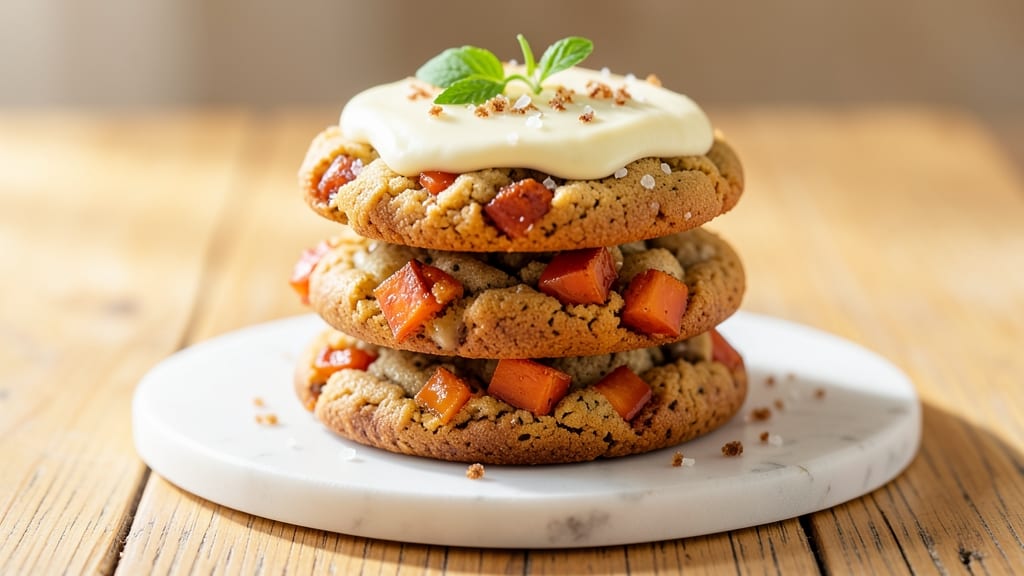
This fast sweet potato breakfast cookie recipe transforms morning routines with its spiced crunch and soft centers—perfect for busy schedules. 💛 The secret lies in blending roasted sweet potatoes into the batter, adding natural sweetness and moisture while keeping the texture irresistibly chewy.
Unlike traditional cookies, these pack fiber, vitamins, and just enough warmth to complement your coffee.
What sets these apart is the balance of flavors: cinnamon and nutmeg create cozy warmth, while a touch of vanilla enhances the sweet potato's natural sweetness. The recipe uses simple pantry staples—no fancy ingredients required—and comes together in under 30 minutes, including prep.
They're designed to be made ahead, so you can grab one on your way out the door without sacrificing taste.
By the time they emerge from the oven, you'll have golden-edged cookies with tender centers that stay soft for days. The spiced crunch pairs beautifully with black coffee, Greek yogurt, or even as a post-workout snack.
Unlike typical breakfast pastries, these cookies deliver both satisfaction and nutrition—ideal for anyone looking to start their day right.
Best of all, they're versatile: Add chocolate chips for extra indulgence or swap in nuts for crunch. Store them in an airtight container for up to a week, making them a convenient grab-and-go option. Here's how to make them effortlessly perfect every time.
Ingredients for sweet potato breakfast cookie
Simple pantry staples meet roasted sweet potato magic for cookies that taste like breakfast in every bite.
| Ingredient | Amount | Notes |
|---|---|---|
| Sweet Potato, Roasted 🍠 | 1 ½ cups | Peeled, cubed, roasted until tender |
| All-Purpose Flour 🌾 | 1 ½ cups | Spooned and leveled for accuracy |
| Brown Sugar, Packed 🍚 | ¾ cup | Lightly packed for sweetness balance |
| Granulated Sugar 🍬 | ¼ cup | For crisp edges |
| Unsalted Butter, Cold 🧈 | ½ cup | Cut into cubes for even baking |
| Large Eggs 🥚 | 2 whole | Room temperature for smooth batter |
| Vanilla Extract 🍯 | 1 tbsp | Pure extract for authentic flavor |
| Ground Cinnamon 🌿 | 1 ½ tsp | Freshly ground for warmth |
| Ground Nutmeg 🌿 | ½ tsp | Freshly grated for depth |
| Baking Soda 🧪 | ½ tsp | For lift and texture |
| Salt 🧂 | ½ tsp | Fine sea salt for balance |
| Chocolate Chips 🍫 | ½ cup | Semi-sweet for indulgence |
| Walnuts, Chopped 🌰 | ¼ cup | Toasted for extra crunch |
The sweet potato is the game-changer here—roast it until tender but not mushy for that perfect texture. Costco or Trader Joe's often have pre-cut sweet potatoes, but grab a whole one if you can; the skin adds fiber. Roast at 400°F until fork-tender, about 25 minutes. For extra flavor, sprinkle with a pinch of cinnamon while roasting. The butter matters too—use Plugrá or Land O'Lakes unsalted for consistent results. And don’t skip the vanilla—Nielsen-Massey is my go-to for that rich, authentic taste.
No roasted sweet potato? Canned pumpkin puree (unsweetened) works in a pinch—use half the amount. Swap brown sugar for coconut sugar if you prefer, though the flavor will be slightly different. The chocolate chips can be swapped for white chocolate or dried cranberries, and walnuts? Pecans or almonds taste just as good. For extra moisture, add 1 tbsp of Greek yogurt to the batter—trust me, it makes them chewier. If your kitchen’s too warm, chill the dough for 30 minutes before baking to prevent spreading.
These cookies stay soft for days when stored properly. Keep them in an airtight container at room temperature for up to 5 days, or freeze for 3 months by wrapping individually in parchment. The walnuts and chocolate chips stay crisp for about 3 days, so if you’re making them ahead, store the extras in the fridge to preserve freshness. Reheat in the oven for 2 minutes at 300°F to revive any lost crunch—worth it for that fresh-baked taste!
Why You'll Love This Recipe
- Sweet Potato Hack: I roast the sweet potato ahead of time—just 45 minutes at 400°F—so it’s already soft and caramelized when I mix it into the dough. No waiting around for starchy veggies to cook fresh.
- Chewy-Sweet Magic: That combo of brown sugar and roasted sweet potato? It’s like a cross between a cookie and a spiced latte in bite-sized form. The cold butter keeps them tender, but the edges get just crisp enough to hold up.
- Breakfast or Snack: Honestly, I make these for breakfast when I’m in a rush, but they’re also my go-to for after-school snacks or packed in lunchboxes. The kids eat them plain; I sneak in a sprinkle of cinnamon for my own.
- No-Waste Pantry Win: Between us, this recipe uses up roasted sweet potatoes I’d otherwise forget about. And since it’s mostly flour, sugar, and butter—staples I already buy—I’m not breaking the bank for something this crave-worthy.
Step-by-step instructions for sweet potato breakfast cookies
Here's the quick, foolproof method for chewy-spiced cookies with soft sweet potato centers.
👨🍳 Step 1: Mix Dry Ingredients for Perfect Texture
In a medium bowl, whisk together the 1.5 cups all-purpose flour, 1.5 teaspoons ground cinnamon, 0.5 teaspoon ground nutmeg, 0.5 teaspoon baking soda, and 0.5 teaspoon salt. I use a whisk for this step to avoid developing too much gluten—you want these cookies tender, not tough. Sift the dry ingredients if your bowl has any lumps, but don't overdo it; a few small clumps are fine.
Set this mixture aside while you prepare the wet ingredients. The reason we mix the dry ingredients first is to prevent flour from forming a paste when combined with the roasted sweet potato. This ensures even distribution of spices throughout each cookie.
🍳 Step 2: Cream Butter and Sugars for Maximum Flavor
In a large mixing bowl, combine the 0.5 cup cold unsalted butter (cut into cubes), 0.75 cup packed brown sugar, and 0.25 cup granulated sugar. Using a hand mixer on medium speed, beat for 2-3 minutes until light and fluffy. You're looking for a texture that nearly doubles in volume—this incorporates air that will create those beautiful crackly tops.
Here's the thing—cold butter is crucial. If your butter is too soft, the cookies will spread too much in the oven. I like to cut mine into small cubes and let them sit at room temperature for just 10-15 minutes before mixing. The butter should be soft enough to press a slight indent with your finger, but not melted.
👨🍳 Step 3: Combine Wet Ingredients for Smooth Batter
Add the 2 whole large eggs (at room temperature) one at a time, mixing on low speed for 30 seconds after each addition until fully incorporated. Then add the 1 tablespoon vanilla extract and mix for another 10 seconds. The mixture should be smooth but still slightly thick—almost like a thick cookie dough.
Now, gradually add the 1.5 cups roasted sweet potato (cooled completely) to the wet mixture. Fold it in gently with a spatula until just combined. You might think the sweet potato will make the dough too wet, but trust me—it comes together perfectly. The roasted sweet potato adds natural sweetness and moisture while keeping the cookies soft in the center.
🥘 Step 4: Fold in Dry Ingredients and Mix-ins
With the mixer on low speed, gradually add the dry ingredient mixture to the wet ingredients. Mix just until combined—about 30-45 seconds. You should still see a few small flour streaks; over-mixing develops gluten and makes cookies tough. Once combined, remove the bowl from the mixer and gently fold in the 0.5 cup chocolate chips and 0.25 cup chopped walnuts using a silicone spatula.
I like to use a spatula for this final step because it prevents breaking up the chocolate chips. Distribute them evenly throughout the dough, but don't worry if some areas have more than others—it'll all balance out when you scoop the cookies. The walnuts add a nice crunch that contrasts beautifully with the soft sweet potato centers.
🔥 Step 5: Bake for Perfectly Soft Centers and Crispy Edges
Preheat your oven to 350°F and line two baking sheets with parchment paper. Using a cookie scoop or tablespoon, drop 1.5-tablespoon portions of dough onto the prepared sheets, spacing them 2 inches apart. They won't spread much, so don't worry about giving them room to grow.
Bake for 12-14 minutes until the edges are golden brown but the centers still look slightly underdone. They'll continue cooking on the hot pan after you remove them from the oven. Here's the key: you want the centers to remain soft and slightly gooey—this is what makes these breakfast cookies special. Let them cool on the baking sheet for 5 minutes before transferring to a wire rack to cool completely.
Pro Tips For Making Sweet Potato Breakfast Cookie
- ROAST UNTIL SOFT: Roast the sweet potato at 400°F (200°C) for 45-50 minutes, cut into 1-inch cubes—you want them to collapse when pressed, not just brown. I learned this the hard way: mushy sweet potatoes make dense, gummy cookies, and nobody wants that.
- CHILL THE DOUGH: Wrap the dough in plastic and refrigerate for at least 1 hour before baking—yes, even if you’re eager. Cold butter stays firm, and the flour absorbs moisture properly, so your cookies hold their shape instead of spreading into sad pancakes.
- WEIGH THE FLOUR: Spoon the all-purpose flour into your measuring cup, then level it off with a knife—don’t scoop directly from the bag. Packed brown sugar? Tap the cup gently on the counter to settle it; no shaking, or you’ll end up with cookies that taste like sugar overload.
- BAKE IN BATCHES: Use a single tray at a time, spacing cookies 2 inches apart—crowding steams them, turning them soggy. Rotate the tray halfway through the 10-12 minutes at 350°F (175°C) for even browning. Trust me, two batches are better than a tray of underbaked, uneven cookies.
Common mistakes when making your sweet potato breakfast cookie
Over-Roasting Sweet Potato
If your roasted sweet potato turns out mushy or dry, the flavor and texture of your cookies will suffer. I've made this mistake more than once—roasting sweet potatoes at 425°F for too long (over 30 minutes) turns them into a paste.
The goal is tender but still slightly firm sweet potato cubes. Roast at 400°F for 25 minutes and check with a fork. It should pierce easily but hold its shape. 🍠
Skipping the Room-Temp Eggs
Using cold eggs straight from the fridge can cause the dough to seize up and develop lumps. I always let my eggs sit at room temperature for 15-20 minutes before mixing. This ensures they blend smoothly with the butter and sweet potato.
Cold eggs also prevent the butter from melting too quickly during mixing, which can lead to flat, greasy cookies instead of the chewy texture you want.
Over-Mixing the Dough
The biggest mistake I see is over-mixing after adding the dry ingredients. Once you fold in the flour mixture, mix just until combined—about 30-45 seconds. Over-mixing develops gluten, which makes cookies tough instead of tender.
I always stop when I see a few small flour streaks remaining. The dough should look shaggy, not smooth. This keeps the texture soft and chewy.
Incorrect Baking Time
Leaving cookies in the oven too long is a common mistake that turns soft centers into dry, crumbly messes. These cookies should bake for 12-14 minutes until edges are golden but centers still look slightly underdone. They'll firm up as they cool.
I've learned the hard way—pull them out when they look perfect, not when they seem "done." The residual heat will finish cooking them on the baking sheet while keeping the centers soft. 🔥
Using Wrong Sugar Ratio
Substituting all brown sugar for granulated sugar throws off the moisture balance. Brown sugar adds moisture and chewiness, while granulated sugar helps create crisp edges.
The recipe calls for 0.75 cup brown sugar and 0.25 cup granulated sugar for a reason—this ratio gives you the perfect combination of texture and flavor. If you swap them, you might end up with cookies that are either too dense or too dry.
Ignoring Dough Chill Time
If your kitchen is warm or the dough feels too soft, skip the chill time at your own peril. I've had cookies spread into flat pancakes because I rushed the baking process. When the dough feels too warm, chill it for 30 minutes before scooping.
This helps maintain shape and prevents excessive spreading. The cookies will hold their form better and bake more evenly. Trust me, this small step makes a big difference! ❄️
Nutrition facts
Frequently asked questions
Can I make these cookies without roasting sweet potatoes?
Yes! Use ¾ cup unsweetened pumpkin puree instead of roasted sweet potatoes. It works well for the same natural sweetness and moisture, though the texture will be slightly denser. Reduce the flour by 1 tablespoon to compensate for the pumpkin's liquid content.
How do I store these cookies to keep them soft?
Store them in an airtight container at room temperature for up to 5 days. For longer storage, freeze individual cookies wrapped in parchment paper for 3 months. Reheat in the oven at 300°F for 2 minutes to revive any lost softness.
Are these cookies vegan-friendly?
With a few swaps, absolutely! Replace the 2 eggs with 2 tablespoons flaxseed meal + 6 tablespoons water (let sit for 5 minutes). Use vegan butter and ensure your chocolate chips are dairy-free. The texture remains chewy, though slightly denser.
Why do my cookies spread too much?
This usually happens when the dough is too warm or the butter melts too quickly. Chill the dough for 30 minutes before baking, and ensure your butter is cold but pliable (not melted). Also, avoid overloading the dough scoop—stick to 1.5 tablespoons per cookie.
Can I add other mix-ins besides chocolate chips and walnuts?
Try dried cranberries, peanut butter chips, or shredded coconut for variety. Keep the total mix-ins to 1 cup to maintain the cookie's balance. For extra protein, fold in ¼ cup oats—they add a delightful texture contrast.