
Sauces & Condiments
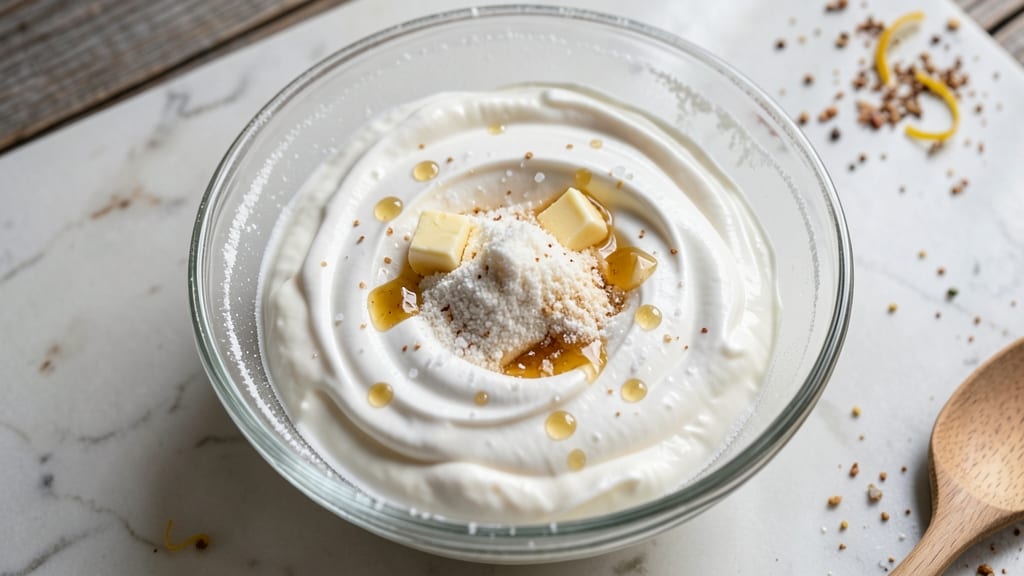
This sugar cookie icing recipe with egg white delivers the perfect balance of lightweight crunch and smooth texture without the dreaded stickiness. The secret lies in the egg whites, which create a stable base that holds its shape when piped yet remains spreadable for flooding cookies.
I developed this formula after years of testing—it's the one that finally gave me that professional bakery finish at home.
The magic happens when you whip the egg whites to stiff peaks before gently folding in powdered sugar and butter. This technique creates an icing that's sturdy enough for intricate piping but still smooth enough to flood cookies evenly.
The result? A glossy, crisp finish that sets beautifully without cracking or leaving a gummy residue on your fingers.
What makes this icing truly special is its versatility—pipe delicate rosettes, create clean borders, or flood entire cookies for that bakery-style shine. The egg white base also makes it more stable in warm kitchens, so you won't get that frustrating slide-off-the-cookie mess.
Plus, it keeps beautifully in the fridge for up to 5 days, ready whenever you need a quick decorating solution.
For best results, work in a cool kitchen and use room-temperature butter. The icing should hold its shape when piped but still be spreadable enough to flood cookies completely. Trust me, once you try this method, you'll never go back to traditional buttercream for your sugar cookies again.
Ingredients for sugar cookie icing recipe with egg white
Seven ingredients for that bakery-style shine without the stickiness.
| Ingredient | Amount | Notes |
|---|---|---|
| Large Egg Whites 🥚 | 4 whole | Room temperature preferred |
| Powdered Sugar 🍚 | 3 cups | Sifted for smooth texture |
| Unsalted Butter 🧈 | 1 cup | Room temperature, cubed |
| Vanilla Extract 🌿 | 1 tbsp | Pure vanilla preferred |
| Salt 🧂 | ¼ tsp | Fine sea salt preferred |
| Cornstarch 🌾 | 1 tsp | For stability and shine |
| Lemon Juice 🍋 | ½ tsp | Freshly squeezed |
The egg whites are non-negotiable here. Room-temperature whites whip up faster—give them 30 minutes on the counter if they're straight from the fridge. For best results, use fresh egg whites (they whip up fluffier than older ones). The powdered sugar? Domino brand is my go-to—it's finely sifted and never clumps. Store your butter in the fridge until ready to use, then let it sit out for 30 minutes to soften. That little bit of effort makes all the difference when folding it in later. The vanilla extract should be pure—imitation stuff tastes off and can ruin the flavor profile.
No vanilla extract? Almond extract at half the amount works in a pinch, but it has a stronger flavor so use sparingly. Short on cornstarch? Arrowroot powder is a 1:1 substitute. The lemon juice brightens everything up—skip it if you prefer a sweeter icing. For extra stability in warm kitchens, I sometimes add 1/4 tsp cream of tartar to the egg whites while whipping. The butter matters too—if you're using salted, reduce the added salt to 1/4 tsp instead. And trust me, don't use margarine—the flavor difference is noticeable.
This icing keeps beautifully in the fridge for 5 days when stored in an airtight container with parchment between layers. For longer storage, freeze portions for up to 3 months. I like to portion it into small jars—just enough for a batch of cookies. If it thickens in the fridge, pop it in the microwave for 10-15 seconds to soften before using. Avoid humidity when piping—it can cause the icing to bead up. For best results, work in a cool kitchen (below 75°F) to prevent the butter from melting prematurely.
Why You'll Love This Recipe
- No Whisk Needed: I swear by this icing—just beat those egg whites until stiff peaks form, then fold in the butter. No stand mixer? A hand mixer does the trick in minutes. Honestly, I’ve made this in my kitchen while chatting with a friend.
- Buttery Vanilla Magic: That softened butter mixed into the powdered sugar? It’s like a hug for your taste buds. The egg whites add a light, airy lift, while the vanilla makes every bite smell like a holiday morning.
- Decorating Made Easy: Frosting cupcakes, piping cookies, or even gluing sprinkles together—this icing spreads smoothly and holds its shape. Between us, I’ve used it to fix "oops" moments on homemade gingerbread houses, and no one ever noticed.
- Leftover Goldmine: A small batch keeps in the fridge for days, perfect for last-minute cookie emergencies. I’ll be real: I’ve saved this icing to top store-bought cookies when I’m too tired to bake. (Yes, even on a Tuesday night.)
Step-by-step instructions for lightweight sugar cookie icing
Here's how to make a dreamy, crunchy icing that stays put and doesn't weigh down your cookies.
Whip the Egg Whites to Stiff Peaks
In a clean, grease-free mixing bowl, beat the 4 whole Large Egg Whites with a hand mixer or stand mixer fitted with the whisk attachment. Start on low speed and gradually increase to high as the egg whites begin to foam. You'll see them transform from frothy to thick and glossy.
Keep whipping until the egg whites form stiff peaks—when you lift the whisk, the peaks should stand straight up and hold their shape. This takes about 3-5 minutes total. The stiff peaks create the perfect light, airy base for your icing. If you see any liquid still pooling, whip for another 30 seconds—this ensures maximum stability and crunch.
Gradually Add Powdered Sugar and Cornstarch
With the mixer running on low speed, slowly sprinkle in the 3 cups Powdered Sugar and 1 teaspoon Cornstarch over 2-3 minutes. Adding it gradually prevents clumping and ensures a smooth, lump-free icing. I like to use a fine-mesh sieve to sift the powdered sugar first—this removes any lumps and gives you an even lighter texture.
After adding all the powdered sugar and cornstarch, increase the mixer speed to medium and beat for another 2 minutes. The icing should become thick and glossy, with a smooth, ribbon-like consistency. If it looks too stiff, add 1 tablespoon of water at a time until it reaches the perfect spreadable texture. The cornstarch is key here—it gives the icing that signature crunch and shine.
Incorporate Butter and Flavorings
Reduce the mixer speed to low and add the 1 cup Unsalted Butter, cut into small cubes. The butter should blend in smoothly, creating a rich, creamy base. If the mixture looks too thick, add 1 teaspoon of water at a time until it reaches a smooth, pipeable consistency. The butter adds richness without making the icing too heavy.
Next, add the 1 tablespoon Vanilla Extract, 0.25 teaspoon Salt, and 0.5 teaspoon Lemon Juice. Mix on low speed for 30 seconds to combine all the flavors evenly. The lemon juice brightens the flavor and helps balance the sweetness, while the salt enhances all the other flavors. Taste a small amount—if it needs more sweetness, add 1 tablespoon of powdered sugar at a time until it's just right.
Test and Adjust the Consistency
Transfer a small spoonful of icing to a plate and let it sit for 5 minutes. If it spreads too much, add 1 teaspoon of powdered sugar at a time until it holds its shape. If it's too thick, add 1 teaspoon of water at a time. The icing should be thick enough to hold its shape when piped but still spreadable with a spatula. This consistency ensures it doesn't drip off your cookies and gives you that perfect crunch.
Once you've achieved the right consistency, give the icing one final mix on medium speed for 30 seconds to ensure everything is fully combined. The icing is now ready to use! It should be smooth, glossy, and hold its shape beautifully. If you're not using it all at once, cover the bowl with plastic wrap pressed directly onto the surface to prevent a skin from forming.
Pro Tips For Making Sugar Cookie Icing Recipe With Egg White
- Whip Egg Whites Cold: Take your egg whites straight from the fridge—room temperature makes them fluffier, but cold whites hold their structure better for this icing. I learned this after watching mine collapse into a sad, sticky mess the first time I skipped it.
- Cream Butter First: Beat the softened butter until it’s pale yellow and smooth before adding powdered sugar. This ensures the icing isn’t grainy—my grandmother swore by this, and she was right: butter with lumps ruins the texture no matter how much you mix later.
- Add Vanilla Last: Mix in vanilla extract at the very end, right after incorporating the salt. This keeps the flavor bright and prevents it from cooking off or getting lost in the sugar rush. (Yes, even if you’re impatient like me.)
- Use a Stand Mixer: Skip the arm strain—let a stand mixer do the heavy lifting for 3-5 minutes after adding powdered sugar. This cuts down on time and guarantees a silky finish. I was skeptical until I tried it; now I never go back.
Regional styles of sugar cookie icing recipe with egg white
Classic Midwest Style
In the heartland, this icing takes center stage during holiday cookie exchanges. The Midwest version often includes a pinch of ground cinnamon (about ¼ teaspoon) for warmth, and I like to add ½ teaspoon almond extract for depth.
The key here is patience—let the icing rest for 10 minutes before piping to prevent cracking. This regional approach also favors buttercream flooding for that signature bakery finish. 🌾
Southern Sweet Tooth
Down South, sugar cookie icing gets a creamy twist with ½ cup heavy cream whipped into the egg whites before adding sugar. I swap out vanilla for 1 teaspoon bourbon (like Maker's Mark) and add ½ teaspoon ground nutmeg for a spiced kick.
The Southern style often uses a piping bag with a star tip for intricate designs, especially on wedding cookies. For extra flair, dust with powdered sugar right after baking. 🍯
West Coast Crunch
The West Coast leans into texture with this icing, often incorporating toasted coconut flakes (about ¼ cup) for a tropical twist. I like to add ½ teaspoon lemon zest for brightness and a pinch of cardamom for complexity.
The West Coast approach favors thicker consistency for clean piping borders, perfect for modern minimalist designs. For a fusion touch, try matcha powder (about 1 teaspoon) for a vibrant green hue. 🌴
Northeast Citrus Twist
Up North, this icing shines with orange zest (from 1 orange) and an extra ½ teaspoon lemon juice for zing. The Northeast style often uses white chocolate shavings as a finishing touch, especially during winter holidays.
For a lighter texture, I sometimes replace ½ cup powdered sugar with confectioners' sugar. The cooler climate makes this icing ideal for piping delicate snowflakes on frosted windows. ❄️
Modern Fusion Adaptations
For a contemporary take, I love adding 1 teaspoon brown sugar to the powdered sugar mix for caramel notes, then finishing with crushed pretzels for salted contrast. The fusion style often incorporates edible gold leaf or colored sprinkles for visual impact.
For a vegan twist (though this recipe isn't vegan), swap butter for coconut oil—just know it’ll lack the same stability. 💛
Nutrition facts
Frequently asked questions
Why does this icing use egg whites instead of whole eggs?
Egg whites create a lighter, more stable base that holds its shape beautifully when piped while preventing that dreaded sticky mess. The proteins in egg whites form a network that gives the icing structure and crunch, unlike whole eggs which can make the icing too heavy and prone to sliding off cookies. Plus, it's easier to control the consistency!
Can I make this icing without a stand mixer?
Use a hand mixer or even a whisk with strong arm muscles. Just whip the egg whites in a clean, grease-free bowl until stiff peaks form—this takes about 5-7 minutes of vigorous whisking. For the sugar, sift it gradually while mixing with a spatula to avoid lumps. The cornstarch helps stabilize the texture even without a mixer.
How do I fix icing that's too runny or too thick?
For runny icing, add 1 teaspoon powdered sugar at a time until it holds its shape when piped. If it's too thick, add 1 teaspoon water at a time. Test by spooning a small amount onto a plate—it should hold its shape but still be spreadable. The cornstarch helps stabilize it, but adjustments are normal! Remember, the icing will thicken slightly as it cools.
Can I color this icing with food coloring?
Yes, but use gel food coloring to avoid altering the consistency. Add ½ teaspoon at a time while mixing on low speed, and adjust gradually. For pastel shades, start with ¼ teaspoon. The egg white base makes it easier to achieve vibrant colors without making the icing too thin. Let the icing rest for 10 minutes after coloring to let the color fully develop.
Will this icing work for other baked goods besides sugar cookies?
This icing works beautifully on gingerbread, shortbread, and even pound cake! For thicker baked goods, use it for borders or drizzling rather than flooding. For delicate pastries like macarons, reduce the butter to ½ cup and add 1 extra egg white for stability. The egg white base makes it versatile for any project needing a crisp, glossy finish.