
Desserts
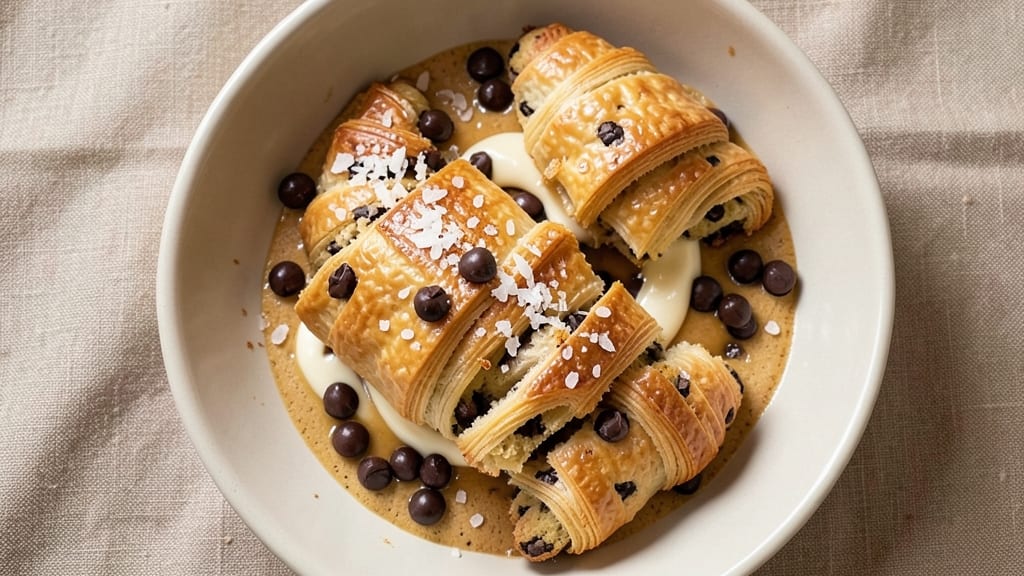
This chocolate chip cookie croissant recipe marries the best of two worlds: flaky, buttery layers and pockets of melty chocolate chip cookie dough. The secret lies in a delicate balance between traditional croissant lamination and cookie dough infusion, creating a pastry that's both sophisticated and indulgent.
I've perfected this technique over years of baking, ensuring every bite delivers crisp, golden layers with bursts of warm cookie flavor.
The process begins with a classic croissant dough, carefully laminated with butter to create those signature flaky layers. What sets this apart is the strategic placement of chocolate chip cookie dough—either as thin layers between butter sheets or as pockets in the final folded shape.
This fusion requires precision in folding and proofing to maintain both structure and texture, but the result is worth every careful step.
When baked to golden perfection, you'll have a croissant that's crisp on the outside, tender within its buttery folds, and infused with the rich, caramelized notes of chocolate chip cookie dough.
The contrast of flaky pastry and gooey cookie chunks creates a harmony that's impossible to resist. Each bite offers a symphony of textures and flavors that elevate this beyond ordinary desserts.
Perfect for breakfast pastries, dessert showcases, or a special treat, this recipe delivers restaurant-quality results at home. The key is patience—letting the dough rest and proof properly ensures maximum flakiness and flavor development. Once mastered, you'll never go back to plain croissants or standard cookies again.
Ingredients for chocolate chip cookie croissant
Six ingredients create flaky layers, twelve transform them into cookie croissant magic.
| Ingredient | Amount | Notes |
|---|---|---|
| Unsalted Butter, European Style 🧈 | 2 cups | Cold, cubed for lamination |
| All-Purpose Flour 🌾 | 4 cups | Bread flour for extra flakiness |
| Granulated Sugar 🍚 | ¼ cup | For cookie dough sweetness |
| Light Brown Sugar 🍚 | ¼ cup | Packed for cookie dough |
| Large Eggs 🥚 | 2 whole | Room temperature preferred |
| Chocolate Chips 🍫 | 1 ½ cups | Semi-sweet or milk chocolate |
| Vanilla Extract 🥛 | 1 tbsp | Pure Madagascar preferred |
| Salt 🧂 | ½ tsp | Fine sea salt preferred |
| Instant Yeast 🍞 | ½ tsp | Freshly opened for best results |
| Milk 🥛 | ¼ cup | Whole milk for richness |
| Granulated White Sugar 🍚 | ¼ cup | For dusting final product |
| Heavy Cream 🥛 | ¼ cup | Cold for brushing |
The butter is non-negotiable—European-style unsalted butter with at least 82% fat content delivers that signature flakiness. Plugrá or President brands are my go-tos, but any high-quality European butter works. Keep it cold throughout the lamination process; if it softens too quickly, chill your work surface and dough scraps. The flour should be bread flour for that extra chewiness in the final texture. I always sift mine before mixing to ensure no lumps interfere with the delicate dough structure. For chocolate chips, Ghirardelli or Guittard brands melt beautifully without burning during baking.
No European butter? Plugrá or Land O'Lakes European-style are solid substitutes. Running short on bread flour? All-purpose plus 1 tbsp vital wheat gluten mimics its protein structure. The cookie dough requires precise sugar balance—light brown sugar packed tightly prevents clumping. For vanilla, imitation extracttest it first with a small batch of dough. The milk can be swapped for heavy cream at half the amount for extra richness, though it'll alter the dough's tenderness slightly.
Store cold butter cubes in an airtight container in the freezer for up to 6 months to prevent spoilage. The dough can be shaped and refrigerated overnight for easier handling—just let it sit at room temperature for 1 hour before baking. Baked croissants keep at room temperature for 2 days in an airtight container, but they're best enjoyed fresh. For longer storage, freeze fully baked croissants for up to 3 months—reheat in a 350°F oven for 10-15 minutes to restore crispness. The cookie dough pockets can be prepped ahead and frozen between parchment paper for 2 weeks before baking.
Why You'll Love This Recipe
- No-Fuss Layers: I swear by the European-style butter here—it’s the secret to that melt-in-your-mouth flakiness. No fancy techniques, just rolling, folding, and letting the dough rest while you make dinner. Honestly, the hardest part is waiting for the oven to preheat.
- Cookie-Croissant Magic: That perfect mix of crispy, buttery layers and gooey chocolate pockets? It’s like a hug for your taste buds. The brown sugar caramelizes just enough to balance the rich chocolate, while the egg binds everything into something dangerously addictive.
- Breakfast or Snack: Between us, I’ve had these cold for breakfast with coffee, reheated as a quick lunch, or packed in my kids’ lunches. The dough’s sturdy enough to handle freezing, so I make a double batch—no one complains when they come out warm from the toaster.
- Budget-Friendly Luxury: European butter might sound fancy, but you only need a stick for the dough and a little extra for brushing. The rest? Flour, sugar, and eggs—pantry staples that stretch into something feels special. Leftovers? They disappear faster than I can say “second helping.”
Step-by-step instructions for chocolate chip cookie croissant
Mastering these buttery layers and cookie dough fusion requires precision—here's how to achieve perfect results every time.
Prepare the Classic Croissant Dough
In a large mixing bowl, combine the 4 cups all-purpose flour, 0.5 teaspoon salt, and 0.5 teaspoon instant yeast. Whisk gently to distribute evenly. Cut in the 2 cups cold unsalted butter, European style using a pastry cutter or your fingers until the mixture resembles coarse crumbs with pea-sized butter pieces. This cold butter is crucial—it creates those signature flaky layers when baked.
Gradually add the 0.25 cup milk while mixing with a wooden spoon until the dough begins to come together. Form into a rough rectangle, wrap in plastic wrap, and refrigerate for 1 hour. This resting period allows the gluten to relax and the butter to firm up, preventing excessive spreading during baking. The dough should be cold but pliable when you're ready to roll it out.
Create the Cookie Dough Filling
In a separate bowl, cream together the 2 whole large eggs (room temperature preferred) with the 0.25 cup granulated sugar, 0.25 cup light brown sugar (packed), and 1 tablespoon vanilla extract using an electric mixer on medium speed for 3-4 minutes until light and fluffy. This step is essential for developing the cookie dough's signature texture and sweetness.
Gently fold in the 1.5 cups chocolate chips using a spatula, ensuring even distribution throughout the dough. The mixture will be thick and slightly sticky—this is normal. Cover the bowl with plastic wrap and refrigerate for 30 minutes to firm up slightly. The cold temperature helps maintain the cookie dough's structure when it comes into contact with the warm croissant dough.
Assemble the Laminated Dough with Cookie Filling
Remove both the croissant dough and cookie dough from the refrigerator. On a lightly floured surface, roll the croissant dough into a 12x16-inch rectangle, about 1/8-inch thick. Spread the cookie dough evenly over the surface, leaving a 1-inch border around the edges. This border prevents the filling from oozing out during baking and ensures a clean, professional finish.
Starting from the long side, tightly roll the dough into a log, sealing the edge as you go. Use a sharp knife to trim the ends, then pinch the seam to seal completely. Wrap the assembled log in plastic wrap and refrigerate for 30 minutes to allow the dough to relax and the layers to set. This chilling step is critical—it prevents the croissants from spreading too much during the final proof and baking.
Proof and Shape the Croissants
Preheat your oven to 375°F and line two baking sheets with parchment paper. Remove the chilled dough log from the refrigerator and slice it into 6 equal pieces, each about 2 inches thick. Gently shape each piece into a crescent moon shape, tucking the ends under slightly to form the classic croissant curve. Place the shaped croissants on the prepared baking sheets, leaving 2 inches between each one for even browning.
Cover the croissants loosely with a clean kitchen towel and let them proof at room temperature for 45-60 minutes, or until they've risen by about 50%. You'll know they're ready when they've puffed up noticeably and the dough feels slightly springy to the touch. Avoid over-proofing—they should be light but still hold their shape when gently pressed.
Bake to Golden Perfection
Brush the tops of the croissants lightly with the 0.25 cup cold heavy cream using a pastry brush. This creates a beautiful golden finish and adds a subtle richness. Bake in the preheated oven for 18-22 minutes, rotating the pans halfway through, until the croissants are deep golden brown and the internal temperature reaches 190°F. The edges should be crisp, and you should hear a hollow sound when you tap the bottoms gently.
Immediately dust the warm croissants with the 0.25 cup granulated white sugar for a sweet, snowy finish. Let them cool on a wire rack for 10 minutes before serving. The warm, gooey cookie dough filling will be at its best when enjoyed fresh from the oven—each bite should deliver a perfect balance of flaky, buttery layers and melty chocolate chip cookie goodness.
Pro Tips For Making Chocolate Chip Cookie Croissant
- Use Cold Butter, Not Warm: I learned this the hard way—mixing softened butter into the dough for chocolate chip cookie croissants makes the layers fight instead of flake. Pull the butter straight from the fridge (or let it sit in the freezer 10 minutes) so it stays firm but pliable. You’ll get those perfect, buttery layers without the dough turning into a sticky mess.
- Mix Brown Sugar First: The brown sugar’s moisture is the real MVP here. Cream it with the butter and eggs before adding the dry ingredients—this keeps the dough from getting too tough. I used to skip this, and the cookies always ended up dry. Do this step, and you’ll taste the caramelized depth in every bite.
- Don’t Overwork the Dough: This isn’t pie dough—handle it like it’s fragile. Once you’ve mixed in the flour, fold just until combined. Overmixing = dense, chewy croissants. Stop when the dough clumps together, then chill it immediately. Patience here means lighter, airier results.
- Chill the Dough Twice: Yes, even if you’re in a rush. After mixing, refrigerate the dough for at least 2 hours (overnight is better). Then, before rolling and cutting, pop it back in the fridge for 15 minutes. This prevents the butter from melting into the flour, which is the fast track to sad, greasy cookies instead of flaky croissants.
Troubleshooting perfect results
Dough Too Sticky
If your croissant dough feels too sticky during handling, you likely need more flour—but don't overdo it. Sprinkle just 1 tablespoon at a time on your work surface and dough scraps while rolling. The dough should be pliable but not cling to your fingers.
I find using bread flour reduces stickiness better than all-purpose. Chill the dough for 15 extra minutes if it's too soft to handle. 🧈
Cookie Dough Leaking
Excessive filling leakage usually means the cookie dough wasn't cold enough before assembly. Always refrigerate both doughs for the full 30 minutes before rolling. For extra insurance, spread the cookie dough in a 1/8-inch layer and leave a 1.5-inch border around edges.
If it still oozes, reduce the filling by 2 tablespoons for each croissant. 🍫
Flat Croissants
Flat croissants typically result from insufficient proofing or overworking the dough. Ensure your proofing time reaches 45-60 minutes and the dough rises 50%. Avoid pressing down on the dough during shaping—gently stretch the ends to form the crescent.
If using a stand mixer, pulse on low speed for just 30 seconds to combine ingredients, not mix vigorously. 🌙
Uneven Browning
For consistent browning, rotate your baking sheets halfway through baking. Brush the tops with cold heavy cream right before baking to enhance color development. If some croissants brown faster, cover them loosely with aluminum foil during the last 5 minutes of baking.
Preheat your oven for at least 30 minutes to ensure even heat distribution. 🔥
Dense Texture
Dense croissants often occur from overproofing or insufficient butter layers. Never let the dough proof beyond 50% rise. When rolling, keep the dough 1/8-inch thick and fold precisely during lamination. Use freshly opened instant yeast—old yeast loses potency.
If your kitchen is cold, proof near a warm spot (like near the oven with the light on) to maintain proper yeast activity. 🍞
Cookie Dough Not Melting
If your cookie dough stays firm after baking, it likely wasn't baked long enough. Aim for an internal temperature of 190°F—use an instant-read thermometer to check. For extra meltiness, spread the cookie dough in thin layers (about 1/16-inch thick) between croissant dough sheets.
Bake at 375°F for the full 20-22 minutes—don't rush it! The residual heat after baking helps melt the chocolate chips. 💫
Nutrition facts
Frequently asked questions
Can I make this recipe with store-bought croissant dough?
Yes, but the texture won't be as flaky or buttery. Use high-quality puff pastry instead—it's closer in structure. For best results, spread 1/4-inch thick layers of cookie dough between the puff pastry sheets before folding. Bake at 375°F for 18-20 minutes until golden. The layers won't be as pronounced, but you'll still get that delicious cookie-croissant fusion!
How do I prevent the cookie dough from oozing out during baking?
Cold is your best friend! Chill both doughs for the full 30 minutes before assembly. Spread cookie dough in a 1/8-inch layer with a 1.5-inch border around edges. For extra security, roll the dough tightly into a log and freeze for 15 minutes before slicing. This creates a firmer barrier that holds the filling in place during proofing and baking.
Can I add other mix-ins to the cookie dough?
Try 1/2 cup chopped nuts or 1/4 cup white chocolate chips for variation. For savory twists, swap chocolate chips for 1/2 cup dried cranberries and 1/4 cup chopped pecans. Keep total mix-ins to 2 cups max to maintain proper texture. Fold them in gently after creaming the eggs and sugars to preserve air pockets.
Why does my dough keep shrinking during proofing?
This usually happens when the dough is too warm or overworked. Keep your kitchen at 70-75°F for ideal proofing. Use a stand mixer only for 30 seconds to combine ingredients—don't overmix. If your dough shrinks, it may need 10 extra minutes of chilling before final proof. For cold climates, proof near a warm oven (with light on) to maintain consistent temperature.
How can I make these ahead of time?
Assembled croissants can be refrigerated overnight—just add 15 extra minutes to proofing time the next day. For longer storage, freeze shaped (unproofed) croissants between parchment paper for 2 months. Thaw in the fridge overnight, then proof and bake as directed. Warm them in a 350°F oven for 5 minutes to restore crispness before serving.