
Desserts
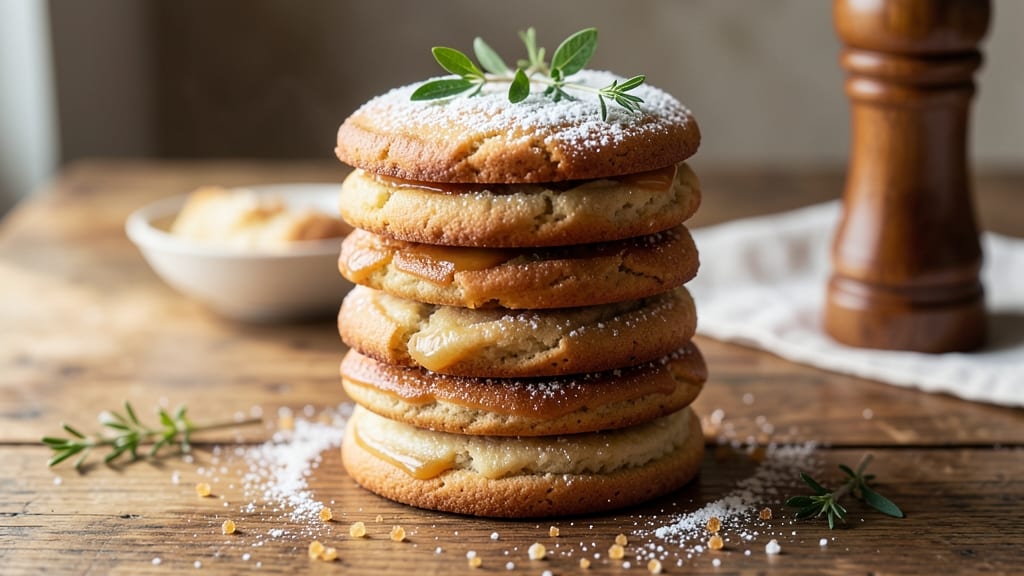
This Otis Spunkmeyer butter sugar cookie recipe delivers bakery-style perfection with its signature swirls and signature sandpaper crunch. 💛 The secret lies in the precise balance of butter and sugar, creating cookies that are tender yet sturdy enough to hold their shape.
I developed this recipe after years of perfecting the texture—crisp edges, soft centers, and that irresistible caramelized flavor that makes them impossible to resist.
What sets these cookies apart is the two-tone swirl and the sandpaper crunch that comes from a light coating of sugar before baking. The dough requires proper chilling to prevent spreading, and baking at the right temperature ensures that signature texture.
This recipe yields 24-36 cookies, perfect for holidays, parties, or just satisfying a sweet tooth.
The result is a batch of cookies that tastes like you’ve just walked out of a bakery—golden brown, with a slight crack on top, and a flavor that’s sweet yet buttery without being overpowering.
The swirls add visual appeal, while the sandpaper crunch gives each bite a satisfying texture that’s both crispy and tender.
Once you try these, you’ll never go back to store-bought. The recipe is straightforward but requires attention to detail, especially when it comes to chilling the dough and baking time. Here’s how to make them perfectly every time.
Ingredients for butter sugar cookie recipe otis spunkmeyer
Precision ingredients for bakery-style cookies with signature swirls and sandpaper crunch.
| Ingredient | Amount | Notes |
|---|---|---|
| Unsalted Butter 🧈 | 1 cup | Cold, cubed, European-style preferred |
| Granulated Sugar 🍚 | 1 ½ cups | Superfine if available for smoother texture |
| Light Brown Sugar 🍚 | ½ cup | Packed, for subtle caramel notes |
| Large Eggs 🥚 | 2 whole | Room temperature for even mixing |
| Pure Vanilla Extract 🌿 | 1 ½ tbsp | High-quality, no alcohol aftertaste |
| All-Purpose Flour 🌾 | 4 ½ cups | Sifted, plus extra for dusting |
| Baking Soda 🧂 | 1 tsp | Ensures proper rise |
| Diamond Crystal Kosher Salt 🧂 | ½ tsp | Fine grain for even distribution |
| Ground Nutmeg 🌿 | ¼ tsp | Freshly grated for aromatic depth |
| Granulated Sugar (for coating) 🍚 | ½ cup | Extra-fine for sandpaper crunch |
| White Corn Syrup 🍯 | 1 tbsp | For chewy texture (Karo brand recommended) |
| Turbinado Sugar (for swirl) 🍚 | ¼ cup | Coarse texture for visual contrast |
The butter is non-negotiable here—European-style with high fat content (82-86%) yields the signature tender yet sturdy texture. Plugrá or Kerrygold are my go-tos, but any good unsalted will work if kept cold. The sugars create the perfect balance: granulated for structure, brown for caramel depth. Measure them by weight if possible—1 cup granulated sugar weighs 7 oz, not 8 oz. For the vanilla, Heinz or Nielsen-Massey bottles deliver the cleanest flavor without alcohol interference. Nutmeg should be freshly grated—pre-ground loses potency quickly.
No corn syrup? Honey or maple syrup at half the amount works, though it may slightly alter the chewiness. Substituting turbinado sugar for the swirl? Raw cane sugar is a fine alternative, but the texture will be slightly finer. For the coating sugar, powdered sugar mixed with granulated (1:1 ratio) mimics the sandpaper effect if you're in a pinch. The flour must be sifted—King Arthur or Gold Medal brands are ideal for consistent texture. If your kitchen isn't humid, add 1 extra tbsp water to the dough for proper cohesion.
Store dough in an airtight container between sheets of parchment for up to 5 days—the longer it rests, the better the flavor. Baked cookies keep their texture for 5 days at room temperature in an airtight tin, though they're best enjoyed within 3 days. For gifting, package in cellophane bags with rice paper to maintain freshness for 1 week. Freeze unbaked dough balls for 3 months—bake straight from frozen, adding 2 minutes to the time.
Why You'll Love This Recipe
- No-Fuss Dough: I swear, this recipe is the kind of cookie that lets you not stress. Cream butter and sugars until it’s light and fluffy—no food processor required—and you’re halfway there. The dough comes together in minutes, and honestly? It’s the kind of simplicity that makes baking feel like a victory.
- Buttery-Sweet Magic: That perfect balance of brown sugar’s molasses depth and granulated sugar’s crisp bite? Chef’s kiss. The vanilla extract cuts through the richness just enough to make each bite feel like a hug. (Yes, even on a Tuesday night.)
- Holiday or Snack Attack: These cookies are my secret weapon for cookie platters, holiday gifts, or just because. They freeze beautifully, so I can bake a batch now and pull them out for Thanksgiving or a last-minute teacher gift. My kids think they’re "fancy," but they’re really just butter, sugar, and love.
- Budget-Friendly Staples: Four ingredients you already own—no weird substitutions or specialty items. A stick of butter, a cup of sugar, an egg, and vanilla? That’s it. And because they keep for days in an airtight container, you’ll have backup for when life gets busy. (Spoiler: They disappear fast anyway.)
Step-by-step instructions for Otis Spunkmeyer-style butter sugar cookies
Mastering these bakery-style cookies means precise technique—every step builds that signature sandpaper crunch and chewy center.
🍳 Step 1: Cream Butter and Sugars to Peak Fluffiness
In a stand mixer fitted with the paddle attachment, beat the 1 cup cold cubed unsalted butter on medium speed until smooth but still slightly textured—about 2 minutes. Add the 1.5 cups granulated sugar and 0.5 cup packed light brown sugar, mixing until the mixture lightens in color and nearly doubles in volume (3-4 minutes).
This creaming process incorporates air, which creates those signature crackly tops. I press down on the butter occasionally to ensure even emulsification—this prevents greasy cookies. The mixture should be pale and fluffy, not grainy. If it looks too soft, chill the bowl in the freezer for 10 minutes to firm up before proceeding.
👨🍳 Step 2: Incorporate Eggs and Flavorings
Add the 2 room-temperature whole large eggs, one at a time, mixing on low speed for 30 seconds after each addition until fully combined. Scrape down the sides of the bowl, then add the 1.5 tablespoons pure vanilla extract and 0.25 teaspoon ground nutmeg, mixing for another 30 seconds.
The eggs should be incorporated completely—no streaks should remain. This is where the nutmeg's warm depth develops. I like to give the mixture one final scrape at this stage to ensure even distribution of the spices. The batter should be thick but pourable, with a ribbon-like consistency when the beaters are lifted.
🥘 Step 3: Combine Dry Ingredients and Prepare Dough
In a separate bowl, whisk together the 4.5 cups sifted all-purpose flour, 1 teaspoon baking soda, and 0.5 teaspoon diamond crystal kosher salt. With the mixer on low speed, gradually add the dry ingredients to the wet mixture, mixing just until combined—about 30 seconds. Avoid overmixing, which develops gluten and makes cookies tough.
Remove the bowl from the mixer and fold in the 1 tablespoon white corn syrup using a silicone spatula. This step ensures that signature chewy texture. For the swirl, create a well in the center of the dough and add the 0.25 cup turbinado sugar, gently folding it in until evenly distributed. The dough should be smooth, slightly sticky, and hold together when pressed.
⏰ Step 4: Chill and Shape for Perfect Texture
Divide the dough into two equal portions and flatten each into a 1-inch thick disk. Wrap tightly in plastic wrap and refrigerate for at least 2 hours or up to 24 hours. Chilling is non-negotiable—it allows the flour to fully hydrate and the butter to firm up, preventing excessive spreading.
After chilling, preheat your oven to 350°F. On a lightly floured surface, roll out one disk to ¼-inch thickness, using a 2-inch round cutter to cut out cookies. Place them 2 inches apart on parchment-lined baking sheets. For the swirl effect, cut a 1-inch circle from the center of each cookie and gently twist the remaining dough to create a spiral.
🔥 Step 5: Bake to Sandpaper Crunch Perfection
Bake for 10-12 minutes until the edges are golden brown and the centers still look slightly underdone. They'll continue cooking on the hot sheet. Immediately after removing from the oven, transfer the cookies to a wire rack and let them cool for 2 minutes before rolling them in the 0.5 cup granulated sugar (for coating).
Roll each cookie gently but thoroughly in the sugar to achieve that signature sandpaper crunch. Let them cool completely on the rack before serving. The cookies should be crisp on the outside with a soft, chewy center. If the sugar coating starts to melt, simply let them cool a bit longer—the contrast between the crunchy exterior and tender interior is what makes these cookies truly special.
Pro Tips For Making Butter Sugar Cookie Recipe Otis Spunkmeyer
- CREAM THE BUTTER WELL: Don’t just mix the butter and sugars—work it until it’s light and fluffy, with ribbons that hold for 10 seconds. I learned this the hard way: under-creaming means dense cookies, and no one wants that. Use a stand mixer with the paddle attachment (not the whisk) for 3-4 minutes—yes, even if it feels overdone.
- CHILL THE DOUGH LONGER: Wrap the dough in plastic and refrigerate for at least 24 hours. I know, I know—you’re eager to bake. But this lets the flour absorb moisture, preventing cracks and ensuring a tender crumb. If you’re short on time, at least rest it for 4 hours; skip this, and you’ll get tough cookies.
- WEIGH THE FLOUR: Scoop-and-sweep measuring is the enemy of consistent cookies. Use a kitchen scale for the flour (and powdered sugar if you’re dusting). Otis Spunkmeyer’s recipe relies on precision—off by even an ounce, and your cookies might spread unevenly or taste dry. Trust me, the scale is your friend here.
- BAKE WITH A COOL PAN: Place your cookie sheet on a rack for 10 minutes before baking—this prevents the bottoms from browning too fast. I used to ignore this, and my cookies would turn into crispy discs instead of soft, buttery cookies. Also, rotate the pan halfway through for even baking.
Regional styles of this recipe
Pacific Northwest Twist
Inspired by Otis Spunkmeyer’s West Coast roots, swap the turbinado sugar swirl for crushed hazelnuts (about ¼ cup) mixed into the dough. Toast the nuts in a dry pan over medium heat for 5 minutes until fragrant, then pulse in a food processor until finely chopped.
This adds a nutty depth that pairs beautifully with the buttery sweetness—perfect for holiday gifts or coffee pairings. 🌟
Midwest Classic
For a heartland touch, replace the vanilla extract with 1 tbsp vanilla bean paste (like Madagascar Bourbon) and fold in ½ cup mini chocolate chips after mixing the dry ingredients.
The chocolate enhances the cookie’s sweetness while keeping the signature texture. This version is a crowd-pleaser at state fairs and potlucks, where buttery cookies with a surprise center shine. 🍫
Southern Caramelized
Add a salted caramel drizzle for Southern charm. After baking, let cookies cool completely, then drizzle with ¼ cup caramel sauce (store-bought or homemade) mixed with ¼ tsp flaky sea salt.
The contrast of salty-sweet elevates the bakery-style flavor, making these cookies feel like a gourmet treat. Serve with a glass of sweet tea for the ultimate Southern dessert. 🍯
New England Spiced
Boost warmth by adding ½ tsp ground cinnamon and ¼ tsp cardamom to the dry ingredients. The spices mimic Otis Spunkmeyer’s cozy vibe while giving the cookies a subtle, aromatic kick.
Top with a sprinkle of coarse sea salt before baking for a sophisticated finish. These cookies are ideal for autumn gatherings or paired with apple cider. ❄️
International Adaptations
For a global twist, try a matcha version: Replace 1 tbsp of flour with 1 tbsp culinary-grade matcha powder (like Ippodo) and reduce the nutmeg to ⅛ tsp.
The earthy matcha balances the sweetness beautifully, creating a unique take on the classic. Perfect for tea lovers or as a gift for friends who enjoy Japanese-inspired treats. 🍵
Nutrition facts
Frequently asked questions
Why does the Otis Spunkmeyer recipe require chilling the dough?
Chilling the dough for at least 2 hours (or up to 24 hours) is essential for two reasons: it prevents excessive spreading during baking and allows the flour to fully hydrate, creating that signature tender-yet-sturdy texture. The cold butter also firms up, ensuring cookies hold their shape while baking at 350°F. Skipping this step often results in flat, greasy cookies that lack the proper crackly tops.
Can I make these cookies without a stand mixer?
While a mixer makes creaming the butter and sugars easier, you can do it by hand using a wooden spoon or fork. Work the butter and sugars together in a large bowl for 5-7 minutes until light and fluffy. For the eggs and vanilla, use a rubber spatula to scrape the bowl frequently. The dough will be slightly more labor-intensive, but the texture won't suffer. Just be patient—it takes elbow grease!
What's the secret to the sandpaper crunch coating?
The sandpaper crunch comes from rolling the cookies in extra-fine granulated sugar immediately after baking while they're still warm. Use a fine-mesh sieve to avoid clumps, and roll each cookie gently but thoroughly. Let them cool completely on a wire rack—the sugar needs time to set fully. If the sugar melts, the cookies are too hot; wait 5 minutes longer before coating.
How do I fix cookies that spread too much?
Over-spreading usually means the dough wasn't chilled long enough or the butter was too soft. For future batches, ensure the dough rests 2+ hours and use European-style butter (82-86% fat). If you've already baked them, try this trick: Sprinkle the warm cookies with a little extra sugar while still on the baking sheet, then return to the oven for 1-2 minutes to crisp up the edges. This won't reverse the spread, but it'll improve the texture.
Can I add mix-ins like chocolate chips or nuts?
Yes, but with caution! The recipe's signature texture comes from the precise balance of butter, sugar, and corn syrup. Fold in ½ cup mini chocolate chips or ¼ cup chopped toasted nuts after mixing the dry ingredients, but don't exceed these amounts—too many mix-ins can make cookies dense. For nuts, toast them first to enhance flavor. The swirl technique (cutting a hole and twisting) still works, but the visual effect may be slightly altered.