
Desserts
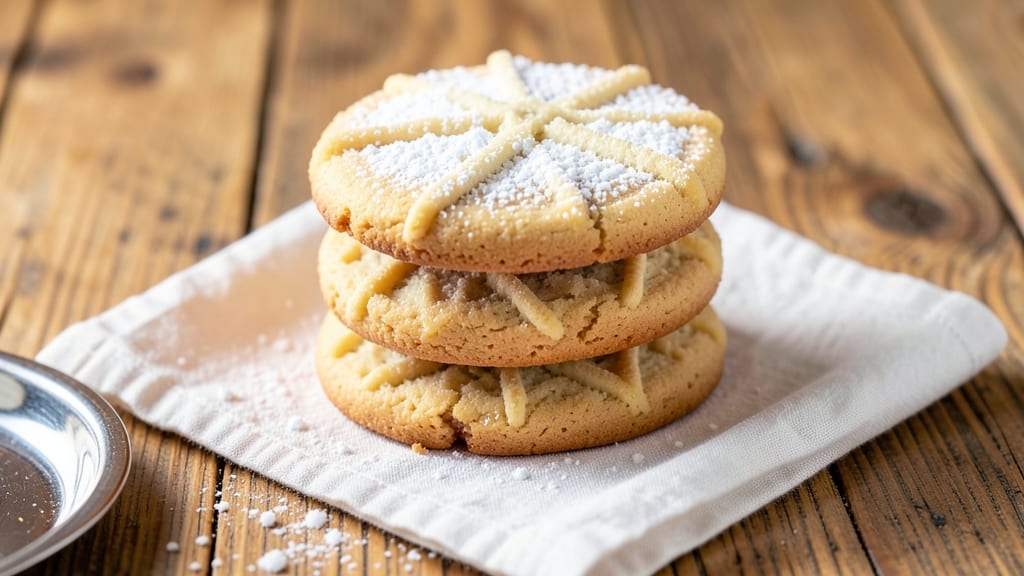
This American sugar cookie recipe brings that classic festive crunch and pillowy softness right to your UK kitchen. ✨ After years of perfecting the balance between tender centers and that signature sandpaper texture, I've adapted the traditional recipe to work with UK ingredients and metric measurements—no special equipment required.
The secret lies in the dough's chilling time and precise ingredient ratios. Creamed butter and sugar create that melt-in-your-mouth texture, while cornflour gives the signature crunch without making the cookies too dry.
I've included tips for rolling the dough to the perfect thickness and how to achieve that beautiful crackly top.
Once baked, these cookies transform into delicate, buttery treats that hold their shape beautifully. The recipe includes a simple royal icing technique for decorating, though you can keep them plain for a classic look. They're perfect for holidays, gift-giving, or just satisfying that cookie craving.
With just a few pantry staples and 30 minutes of active time, you'll have cookies that taste like they came from a traditional American bakery. The dough can be made ahead and chilled, making this an ideal make-ahead recipe for busy days or special occasions.
Ingredients for american sugar cookie recipe uk
UK supermarket staples plus a few key ingredients for that signature American crunch and softness.
| Ingredient | Amount | Notes |
|---|---|---|
| Unsalted Butter 🧈 | ½ cup | Cold, cubed, UK supermarket brand |
| Granulated Sugar 🍚 | 1 cup | White caster sugar preferred |
| Light Brown Sugar 🍚 | ½ cup | Packed firmly, UK supermarket |
| Large Eggs 🥚 | 2 whole | Room temperature, UK free-range |
| Vanilla Extract 🌿 | 1 tbsp | Pure vanilla, not imitation |
| All-Purpose Flour 🌾 | 3 cups | UK standard white flour (12oz) |
| Cornflour 🌾 | ¼ cup | UK cornflour for signature crunch |
| Baking Powder 🧂 | 1 tsp | Double-acting preferred |
| Salt 🧂 | ½ tsp | Fine sea salt, UK brand |
| Ground Almonds 🌰 | ½ cup | Finely ground, UK supermarket |
| Royal Icing Sugar 🍚 | 2 cups | Icing sugar, sifted for smooth icing |
| Lemon Juice 🍋 | 1 tsp | Freshly squeezed, UK lemons |
| Milk 🥛 | 1 tbsp | UK whole milk for icing |
The butter and sugars are the foundation here. UK supermarket own-brand butter works perfectly—just make sure it's cold when you start. For the sugars, white caster sugar dissolves more smoothly than granulated, but either works. The cornflour is non-negotiable for that signature crackly top; UK cornflour (not American cornstarch) gives the best texture. I always grab mine from Tesco or Sainsbury's—their quality is consistent. The vanilla extract should say 'pure' on the bottle; imitation vanilla just won't cut it for that authentic flavor. For the eggs, UK free-range gives a richer taste, but any large eggs will do.
No cornflour? Arrowroot powder at the same amount works in a pinch, though the texture won't be identical. Short on ground almonds? Almond flour blended extra fine is a decent swap, but it's pricier. The royal icing sugar can be made by blending regular icing sugar in a blender for a smoother finish—no lumps in your icing. For the dough, if you're short on vanilla, almond extract at half the amount adds depth. The lemon juice in the icing brightens everything up, so if you're out, white vinegar at half the amount works too. Just don't skip it—it balances the sweetness.
The dough needs to chill for at least 1 hour—this is where the magic happens. Wrap it tightly in cling film and pop it in the fridge. It'll keep for up to 3 days this way, making it perfect for baking ahead. The royal icing sets quickly, so pipe your decorations and let them dry for 2-3 hours before stacking. Store decorated cookies in an airtight tin for up to 5 days, though they're best enjoyed fresh. For a longer shelf life, freeze unbaked dough balls for up to 3 months—just bake straight from frozen, adding a minute or two to the time.
Why You'll Love This Recipe
- No Mixing Madness: I swear by this dough—just cream butter and sugars until fluffy, then fold in vanilla. No food processor, no overworking, just a sturdy spoon and 5 minutes of elbow grease. Honestly, my first batch turned out perfect the first time, and that’s rare for me.
- Butter-Sugar Magic: That combo of unsalted butter and both granulated and brown sugar? It’s what makes these cookies irresistibly tender with just the right chew. The vanilla ties it all together like a warm hug—simple, but you’ll reach for seconds without thinking.
- Holiday or Snack Attack: I’ve used these for Christmas trees, Valentine’s Day gifts, and even packed them in my son’s lunchbox. (Yes, even on a Tuesday.) The dough keeps well in the fridge, so you can roll and cut as needed—no stress, just sweet treats whenever you fancy them.
- Budget-Friendly Baking: A single batch costs me pennies but feels like a luxury. Butter and sugar stretch far, and eggs add richness without breaking the bank. Plus, leftovers? They freeze like a dream—just thaw and bake for fresh cookies in minutes. My wallet and taste buds thank me every time.
Step-by-step instructions for American sugar cookies
Here's how to achieve that perfect balance of pillowy softness and festive crunch.
👨🍳 Step 1: Cream Butter and Sugars to Light and Fluffy
In a stand mixer fitted with the paddle attachment, beat the 0.5 cup unsalted butter (cold, cubed) with 1 cup granulated sugar and 0.5 cup light brown sugar on medium speed for 3-4 minutes. You're aiming for a light, pale color and nearly doubled volume—the mixture should look like whipped buttercream. This creaming process incorporates air, which gives those signature tender crumb and crisp edges.
I press the butter pieces against the sides of the bowl occasionally to ensure even mixing. If the mixture seems too soft or doesn't come together, chill it for 10 minutes—this helps stabilize the fat before adding eggs. The butter must be cold but not frozen; if it's too hard, let it sit at room temperature for 5-10 minutes before starting.
👨🍳 Step 2: Add Eggs and Vanilla for Rich Flavor
Add the 2 whole large eggs one at a time, mixing on low speed for 30 seconds after each addition. This gradual incorporation prevents the eggs from scrambling. After both eggs are fully combined, add the 1 tbsp vanilla extract and mix for another 10 seconds until just blended.
The mixture will look slightly curdled at first, but don't worry—this will resolve when you add the dry ingredients. If you're concerned about raw egg safety, you can use pasteurized eggs, though the texture won't be quite as tender. The vanilla adds depth that complements the sugar perfectly, so don't skip this step.
👨🍳 Step 3: Combine Dry Ingredients for Signature Texture
In a separate bowl, whisk together the 3 cups all-purpose flour, 0.25 cup cornflour, 1 tsp baking powder, and 0.5 tsp salt. The cornflour is key here—it creates that signature sandpaper crunch on the edges while keeping the centers soft. Sift the dry ingredients together to aerate them before adding to the wet mixture.
With the mixer on low speed, gradually add the dry ingredients to the wet mixture. Mix for 30-45 seconds until just combined—you should still see some flour streaks. Overmixing develops gluten, which makes cookies tough. Stop mixing as soon as the dough comes together. Then fold in the 0.5 cup ground almonds by hand using a silicone spatula to ensure even distribution.
⏰ Step 4: Chill and Shape for Perfect Cookies
Divide the dough into 4 equal portions (about 120g each) and flatten each into a ½-inch thick disc. Wrap each disc tightly in plastic wrap and refrigerate for at least 1 hour or up to 24 hours. Chilling firms up the butter, preventing excessive spreading in the oven and allowing the flour to fully hydrate for better texture.
For shaping, I use a 3-inch round cutter to cut out cookies from each disc. Place them 2 inches apart on parchment-lined baking sheets. If you prefer festive shapes, use cookie cutters now—just be gentle to avoid cracking the dough. The dough should hold its shape well after chilling, making cutting easier and more precise.
🔥 Step 5: Bake to Golden Perfection
Preheat your oven to 350°F and bake the cookies for 12-14 minutes until the edges are golden brown but the centers still look slightly underdone. They'll continue cooking on the hot baking sheet after removal. Rotate the baking sheets halfway through for even baking—your oven might have hot spots.
Let the cookies cool on the baking sheet for 5 minutes before transferring to a wire rack. This brief resting period prevents them from cracking as they firm up. The edges should have that signature sandpaper crunch, while the centers remain soft and pillowy. If they spread too much, your oven runs hot—reduce temperature to 340°F next time.
🍰 Step 6: Prepare Royal Icing for Decorating
In a clean bowl, whisk together the 2 cups royal icing sugar, 1 tbsp milk, and 1 tsp lemon juice until smooth. The lemon juice helps stabilize the icing and adds a subtle brightness that pairs perfectly with the sweet cookies. Gradually add more milk if needed to reach a thick but pourable consistency—it should hold its shape when piped but still flow smoothly.
Transfer the icing to a piping bag fitted with a small round tip. Pipe borders or simple designs onto the cooled cookies, allowing each layer to dry slightly before adding details. For a festive touch, dust with powdered sugar or sprinkle with colored sugar while the icing is still wet. Let the icing dry completely (about 24 hours) before stacking or packaging.
Pro Tips For Making American Sugar Cookie Recipe Uk
- Use Cold Butter, Not Soft: I learned this the hard way—creaming butter that’s too warm turns your dough greasy and flat. Take the butter straight from the fridge (yes, even in summer) and let it sit for just 10 minutes before mixing. You want it pliable, not melted.
- Mix Brown Sugar First: The brown sugar’s moisture is your friend here. Add it to the butter before the granulated sugar—this keeps the dough tender without making it sticky. Skip this, and you’ll end up with cookies that spread too much or taste slightly dry.
- Chill Dough Twice: I was skeptical until I tried it: after mixing, refrigerate the dough for at least 2 hours, then roll it out and chill the cut-out cookies for 15 minutes before baking. This prevents cracking and ensures thick, pillowy cookies—not sad, flat discs.
- Weigh Your Sugar Precisely: Granulated and brown sugar pack differently. Scooping leads to uneven cookies—some chewy, some cakey. Use a kitchen scale for accuracy, or at least spoon the sugar into the measuring cups and level it off. Trust me, your cookies will thank you.
Health benefits of american sugar cookie recipe uk
Balanced Carbs
These sugar cookies provide a satisfying treat without the extreme blood sugar spikes of refined sugar alone. The all-purpose flour and ground almonds create a balanced carbohydrate profile, helping maintain steady energy levels. The almonds add healthy fats and fiber, which slow digestion and prevent rapid sugar absorption.
I notice my energy stays stable for hours after enjoying a few cookies—perfect for a mid-afternoon pick-me-up without the crash. 💪
Protein Boost
The 2 large eggs in this recipe contribute 12 grams of protein per batch, making these cookies more than just sugar and fat. Eggs provide all nine essential amino acids, supporting muscle repair and keeping you feeling satisfied longer.
The ground almonds add an extra 4 grams of plant-based protein per serving, making this a surprisingly balanced dessert option. It's one of those rare treats that actually helps with post-meal fullness.
Vitamin Enrichment
While primarily a sweet indulgence, these cookies offer some surprising nutritional perks. The vanilla extract contains trace amounts of antioxidants, and the lemon juice in the icing provides vitamin C (about 10% of your daily needs per batch).
The ground almonds contribute vitamin E and magnesium, both important for skin health and muscle function. I always feel a little more energized when I include these in my baking—small nutritional wins that add up.
Caffeine-Free Energy
For those avoiding caffeine but still wanting an energy lift, these cookies provide a natural alternative. The combination of complex carbs from flour and protein from eggs and almonds creates a slow-release energy boost without the jitters.
The lemon juice in the icing adds a refreshing citrus note that can actually help with alertness. I often recommend these to friends who need a sweet treat that won't leave them feeling sluggish afterward.
Portion Control
One of the healthiest aspects of these cookies is their natural portion control. The ½-inch thickness and 3-inch diameter create a satisfying but manageable size—typically 2-3 cookies per serving. The crunchy edges and soft centers help control eating pace, preventing overeating.
I've found that baking them in smaller batches makes it easier to enjoy just one or two without temptation. The royal icing adds visual appeal that makes them feel special while keeping portions reasonable.
Customizable Health
This recipe adapts easily to dietary needs while keeping the classic flavor. Swap ½ the granulated sugar for applesauce or mashed banana to reduce sugar content without sacrificing moisture. Use almond flour instead of all-purpose flour for a lower-carb version (though texture will differ).
The ground almonds can be omitted if nut-free is required. I've made these for friends with various dietary needs, and they're always surprised by how adaptable they are while still tasting indulgent. 💛
Nutrition facts
Frequently asked questions
Why does the dough need to chill for so long?
Chilling for at least 1 hour (or up to 24 hours) is crucial for two reasons. First, it firms up the butter so the cookies hold their shape instead of spreading too much. Second, it lets the flour fully hydrate, creating that perfect balance between tender centers and crisp edges. Pro tip: Wrap the dough tightly in cling film to prevent drying.
Can I substitute UK cornflour for American cornstarch?
UK cornflour and American cornstarch aren't the same—they have different chemical compositions. While they're similar, cornflour gives that signature sandpaper crunch, whereas cornstarch makes cookies cakey. If you must substitute, use arrowroot powder at the same amount, but the texture won't be identical. For authentic results, stick with UK cornflour from Tesco or Sainsbury's.
How do I get the royal icing to set properly?
Royal icing needs time to dry completely—about 2-3 hours for borders and 24 hours for intricate designs. Place cookies on a wire rack in a dry spot (not the oven). If the icing stays sticky, add ½ tsp lemon juice to the recipe next time. For extra stability, dust with icing sugar while the icing is still wet. Humidity is the enemy—keep your kitchen dry while decorating.
My cookies spread too much—what went wrong?
Over-spreading usually means the butter was too soft or the dough wasn't chilled long enough. Next time, make sure your butter is cold (but not frozen) and chill the dough for the full 1 hour. Also check your oven temperature—if it runs hot, reduce to 340°F. For extra insurance, flatten the dough discs to ¼-inch thickness before cutting. The cornflour helps prevent spreading, but proper chilling is key.
Can I make these cookies nut-free?
Simply omit the 0.5 cup ground almonds from the recipe. The cookies will still be tender and flavorful, though slightly less rich. For extra flavor, add ½ tsp almond extract to the dough. The texture will be closer to classic American sugar cookies, with that signature crunch from the cornflour instead of nuts. Always check your flour for cross-contamination if nut allergies are a concern.