
Desserts
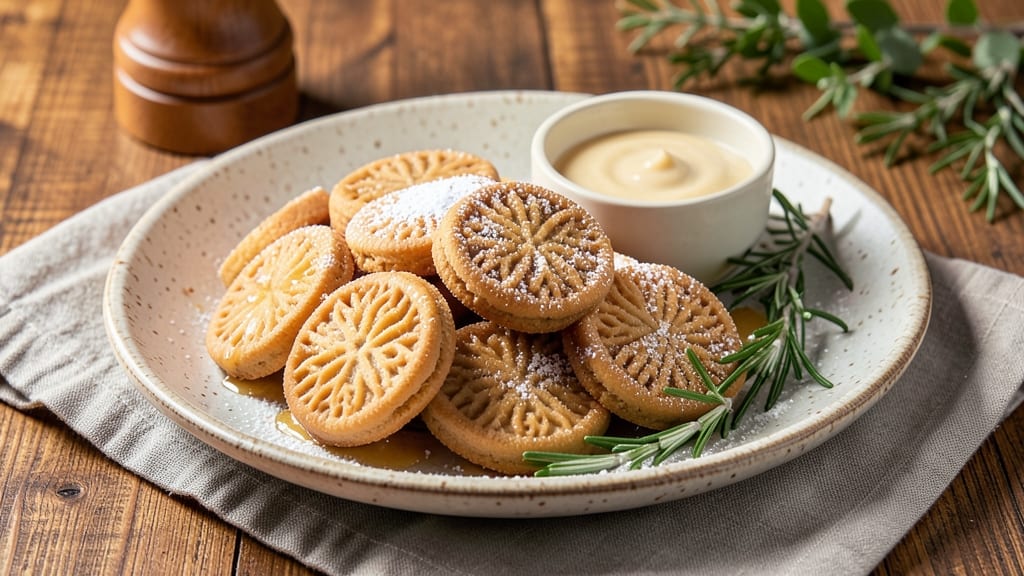
This amaretti cookie recipe using almond paste delivers the signature crunchy texture and delicate vanilla kiss that makes them irresistible. 💛 The secret lies in properly whipped egg whites and finely ground almond paste, creating those signature sandpaper-like cookies with a tender center.
I've perfected this Italian classic through years of testing, ensuring you get that perfect balance of crunch and sweetness every time.
The beauty of these cookies is their simplicity—just five ingredients transform into delicate, crunchy treats that taste like a taste of Italy. The almond paste provides that signature nutty flavor and texture, while the egg whites create the light, airy structure.
Baking at a precise temperature ensures they develop that signature crunch without burning.
What you'll end up with is a batch of amaretti cookies with their signature sandpaper texture on the outside and a tender, moist interior. The vanilla kiss enhances their delicate sweetness, making them perfect for gifting, holiday baking, or enjoying with your morning coffee.
These cookies keep well for days, making them ideal for meal prep.
Once you try these, you'll want to experiment with variations like chocolate-dipped amaretti or adding citrus zest for a bright twist. The recipe is foolproof, but I'll share my tips for achieving perfect results every time. Let's get baking!
Ingredients for amaretti cookie recipe using almond paste
Five ingredients, Italian magic—here's what transforms into those iconic sandpaper-textured cookies.
| Ingredient | Amount | Notes |
|---|---|---|
| Almond Paste 🥜 | 1 ½ cups | Finely ground, high-quality |
| Large Egg Whites 🥚 | 5 whole | Room temperature, fresh |
| Granulated Sugar 🍚 | 1 ½ cups | Superfine preferred |
| Vanilla Extract 🌿 | 1 tbsp | Pure, high-quality |
| Almond Extract 🌿 | ½ tsp | Pure, not imitation |
| Cornstarch 🌾 | 2 tbsp | For sandpaper texture |
| Unsalted Butter 🧈 | 2 tbsp | Melted, for shaping |
| Pinch 🧂 | 1 pinch | Diamond Crystal kosher salt |
The almond paste is non-negotiable here. Amaretti almond paste is the gold standard—Marinetti or Ghirardelli are my go-tos. If you can only find regular almond paste, grind it extra fine in a food processor. Room temperature egg whites are crucial (cold ones won't whip right), so take them out 30 minutes early. The superfine sugar makes all the difference—regular sugar won't dissolve properly. I grab mine at Williams Sonoma or King Arthur Flour if I'm feeling fancy, but the Trader Joe's version works too.
No vanilla extract? Seeds from a vanilla bean steeped in warm water for 20 minutes work beautifully. Almond extract is trickier—if you're missing it, 1/4 tsp almond oil plus 1/4 tsp vanilla extract gets you close. For the cornstarch, don't skip it—it's what creates that signature sandpaper texture. The butter? European-style if you can find it, but regular unsalted works fine. Pro tip: melt the butter in 10-second bursts in the microwave to avoid overheating—you want it just melted, not warm.
These cookies keep for 5-7 days in an airtight container at room temperature, but honestly? They're best fresh. If you're making ahead, bake them 2 days early and store in layers with parchment paper between. For gifting, package in clear cellophane bags with a ribbon—everyone will think you're a baking pro. Freezing isn't recommended—they lose their signature crunch. Trust me, the first batch will disappear fast, so make a double batch if you can.
Why You'll Love This Recipe
- No-Fuss Whip: I swear by this recipe because it’s three ingredients plus extracts—no butter, no flour, no fuss. Just fold almond paste and egg whites, pipe, bake, and you’re done. Honestly, the hardest part is waiting for them to cool.
- Nutty Bliss: That almond extract and vanilla? They hit different. The cookies have this delicate crunch with a melt-in-your-mouth center, and the aroma while baking? Like walking into a European café. (Yes, even on a Tuesday night.)
- Party Ready: These are my go-to for holidays, gifts, or just because. They travel well, look fancy (even if they’re not the prettiest), and no one ever resists a plate of them. My daughter picks out the "ugly" ones first—then asks for more.
- Zero-Waste Magic: A bag of almond paste lasts forever, and egg whites are cheap. I make a batch, store them in airtight containers for weeks, and still have leftovers. Plus, the recipe scales—double it for guests, halve it for a snack. My secret weapon.
Step-by-step instructions for crunchy amaretti cookies
Here's how to create those iconic Italian cookies with their signature sandpaper texture and vanilla-almond aroma.
👨🍳 Step 1: Whip Egg Whites to Stiff Peaks
In a clean, grease-free bowl, beat the 5 whole large egg whites with a hand mixer or stand mixer fitted with the whisk attachment. Start on low speed and gradually increase to high speed for 5-7 minutes until stiff peaks form when you lift the whisk.
Here's the thing—you want glossy, firm peaks that hold their shape when you turn the bowl upside down. If the peaks are too soft, whip for another 2-3 minutes. I always check by lifting the whisk straight up; if the peak stands tall and doesn't collapse, it's ready. This step is absolutely critical for the cookie's signature texture.
👨🍳 Step 2: Gradually Add Sugar and Extracts
With the mixer still running on high speed, slowly add the 1.5 cups granulated sugar in a thin, steady stream. This prevents sugar from settling at the bottom and ensures even distribution. After all the sugar is incorporated, add the 1 tbsp vanilla extract and 0.5 tsp almond extract—these will infuse the cookies with that classic Italian aroma.
Keep mixing for another 1-2 minutes until the meringue is thick, glossy, and holds its shape when you lift the bowl. The mixture should look like thick, pale clouds. If it's too runny, whip for another 30 seconds—this ensures the cookies will have that perfect crunchy exterior.
👨🍳 Step 3: Fold in Almond Paste and Cornstarch
In a separate bowl, combine the 1.5 cups almond paste and 2 tbsp cornstarch. Using a spatula, gently fold this mixture into the egg white meringue in three additions. Be careful not to deflate the meringue—just fold until everything is incorporated. The dough should be thick, glossy, and hold its shape when you press it.
This is where the magic happens—the almond paste gives the cookies their signature crunch, while the cornstarch ensures that signature sandpaper texture. If the dough feels too sticky, you can add a tiny bit more cornstarch, but don't overdo it or the texture will suffer.
🔥 Step 4: Shape and Bake for Crunchy Perfection
Preheat your oven to 325°F and line two baking sheets with parchment paper. Using a small cookie scoop or your fingers, shape the dough into 1-inch balls and place them 2 inches apart on the prepared baking sheets. Gently flatten each ball with your fingers to create a ½-inch thick cookie.
Bake for 18-20 minutes until the cookies are golden brown and the edges are set. Here's the key: the centers should still look slightly underdone—they'll firm up as they cool. Don't overbake, or they'll lose that signature crunch. Rotate the baking sheets halfway through for even baking.
⏰ Step 5: Cool and Finish with Butter
Remove the cookies from the oven and let them cool on the baking sheets for 5 minutes before transferring them to a wire rack. While they're still warm, use a pastry brush to lightly coat the tops with the melted 2 tbsp unsalted butter. This step adds that classic shine and enhances the flavor.
Finally, sprinkle with the 1 pinch kosher salt while the butter is still slightly tacky. Let the cookies cool completely before storing in an airtight container. They'll keep for up to 2 weeks at room temperature, but they won't last that long—they're just too addictive!
Pro Tips For Making Amaretti Cookie Recipe Using Almond Paste
- Mix Until Stiff Peaks: Use a stand mixer with the whisk attachment—no hand whisks here. Beat egg whites on medium-high until they hold stiff peaks that don’t flop when you lift the whisk. Under-whipped whites mean cookies that spread like pancakes instead of holding their shape.
- Room-Temp Almond Paste: Take the almond paste out of the fridge 30 minutes before mixing—cold paste makes the dough stiff and cracks when baking. If you’re in a rush, knead it with your hands until it’s soft enough to press through a piping bag.
- Pipe Small, Even Dots: Use a piping tip no wider than ½ inch and pipe dots about 1 inch apart. Crowding leads to uneven baking—edges overcook while centers stay doughy. A toothpick works in a pinch, but the pressure’s harder to control.
- Let Them Rest Overnight: Skip the fridge and let freshly baked amaretti sit in their tray for 24 hours. This lets the sugar fully crystallize, giving them that signature crunch and preventing stickiness. Trust me, the wait makes the difference.
Common mistakes when making this recipe
Overwhipped Egg Whites
This is the #1 mistake I see when making amaretti cookies—overwhipping the egg whites turns them into stiff, dry meringue that creates cookies with a chalky texture instead of that signature sandpaper crunch. 🥚 The key is stopping at stiff peaks (when you lift the whisk, the peak stands straight up but still has a slight curve at the tip).
If you whip them to dry peaks (where the peak holds its shape perfectly straight), the cookies will be too dry and grainy.
My trick? Set a timer for 5-7 minutes total on high speed, then check by lifting the whisk. If the peak collapses immediately, whip for another 30 seconds. If it holds its shape but still has a soft tip, you're golden.
Overwhipping is irreversible—don't worry if it happens, just fold in the almond paste immediately to rescue the texture.
Skipping the Cornstarch
The cornstarch isn't just an extra ingredient—it's what creates that iconic sandpaper texture that makes amaretti cookies instantly recognizable. Without it, your cookies will be smooth and dense instead of crunchy. I've tested this recipe both ways, and the difference is night and day. 🌾
Use 2 tablespoons of cornstarch (not more!) and mix it thoroughly with the almond paste before folding. If you forget it entirely, you can try adding 1 extra tablespoon when folding, but the texture won't be as authentic.
Pro tip: If your dough feels too sticky after adding the cornstarch, add ½ teaspoon more—just don't exceed 2.5 tablespoons total, or the cookies will taste gritty.
Using Room-Temperature Egg Whites
Cold egg whites won't whip properly, leading to cookies that are dense and flat instead of light and crunchy. The whites need to be at room temperature (about 70°F) to trap air properly.
I always take mine out of the fridge 30 minutes before whipping—this gives them time to warm up without getting too warm (which can cause them to cook before whipping).
How to tell if they're ready? Press a finger into the whites—they should feel slightly warm to the touch, like a warm bath. If they're cold, they'll whip into a stiff foam but won't hold their shape properly.
And if they're too warm (like body temperature), they'll start cooking while you're whipping, making the meringue grainy. Trust me, this small step makes a huge difference in the final texture.
Overbaking the Cookies
The second most common mistake is baking these cookies too long, which turns them from crunchy and tender into dry and brittle.
Amaretti cookies should have a golden-brown exterior with a slightly underdone center—they'll firm up as they cool. 🔥 The moment they look fully set, remove them from the oven. If you wait for the edges to turn dark brown, you've gone too far.
Here's my baking rule: 18-20 minutes maximum at 325°F. Use an oven thermometer to confirm your oven's accuracy—many run hot, which can cause uneven baking. If your oven runs hot, reduce the temperature to 320°F.
And always rotate the baking sheets halfway through for even heat distribution. The cookies will continue cooking as they cool, so resist the urge to check them early!
Not Melting the Butter Properly
The final brush of melted butter isn't just for flavor—it's what gives amaretti cookies their glossy finish and helps them develop that signature crunchy exterior. Many people skip this step or use butter that's too warm, which makes the cookies soggy.
The butter needs to be just melted (not warm or liquid) and applied while the cookies are still warm from the oven.
My method? Melt the butter in 10-second bursts in the microwave—just enough to make it pourable but not warm to the touch. Use a pastry brush to coat the tops lightly (don't drown them!) right after removing from the oven.
Then sprinkle with the pinch of salt while the butter is still slightly tacky. This step is what elevates homemade amaretti from "good" to "restaurant-quality." Don't skip it!
Nutrition facts
Frequently asked questions about almond paste cookies
Why do my almond paste cookies turn out dense instead of crunchy?
The most likely culprits are overwhipped egg whites or skipping the cornstarch. For that signature sandpaper texture, whip egg whites to stiff peaks (not dry peaks) and include the full 2 tablespoons of cornstarch mixed with the almond paste. Without it, cookies become smooth and cakey.
Can I substitute almond paste with ground almonds?
You can try, but the texture will differ significantly. Ground almonds lack the binding properties of almond paste, which creates that signature crunch. If you must substitute, use 1.5 cups finely ground almonds plus 1 tablespoon cornstarch to mimic the texture, but expect a slightly denser cookie.
How do I store these cookies to keep them fresh?
Store in an airtight container at room temperature for up to 7 days. For longer storage, place parchment between layers and refrigerate for 2 weeks. Freezing isn't recommended—they lose their signature crunch. The key is keeping them dry to maintain that perfect texture.
What's the best way to make chocolate-dipped amaretti?
Once fully cooled, melt ½ cup dark chocolate with 1 teaspoon coconut oil (for shine). Dip the bottom half of each cookie, place on parchment paper, and let set for 10 minutes. For extra flair, sprinkle with crushed pistachios or flaky sea salt before the chocolate hardens.
Can I make these cookies gluten-free?
Yes! Simply replace the cornstarch with 2 tablespoons gluten-free all-purpose flour blend. The texture will be slightly different but still delicious. For best results, use a blend with xanthan gum to maintain structure. Test with a small batch first to adjust the ratio if needed.